First Gear, Wednesday, July 8
2 critical, 6 happenings, 1 essay, from today's newsletters.
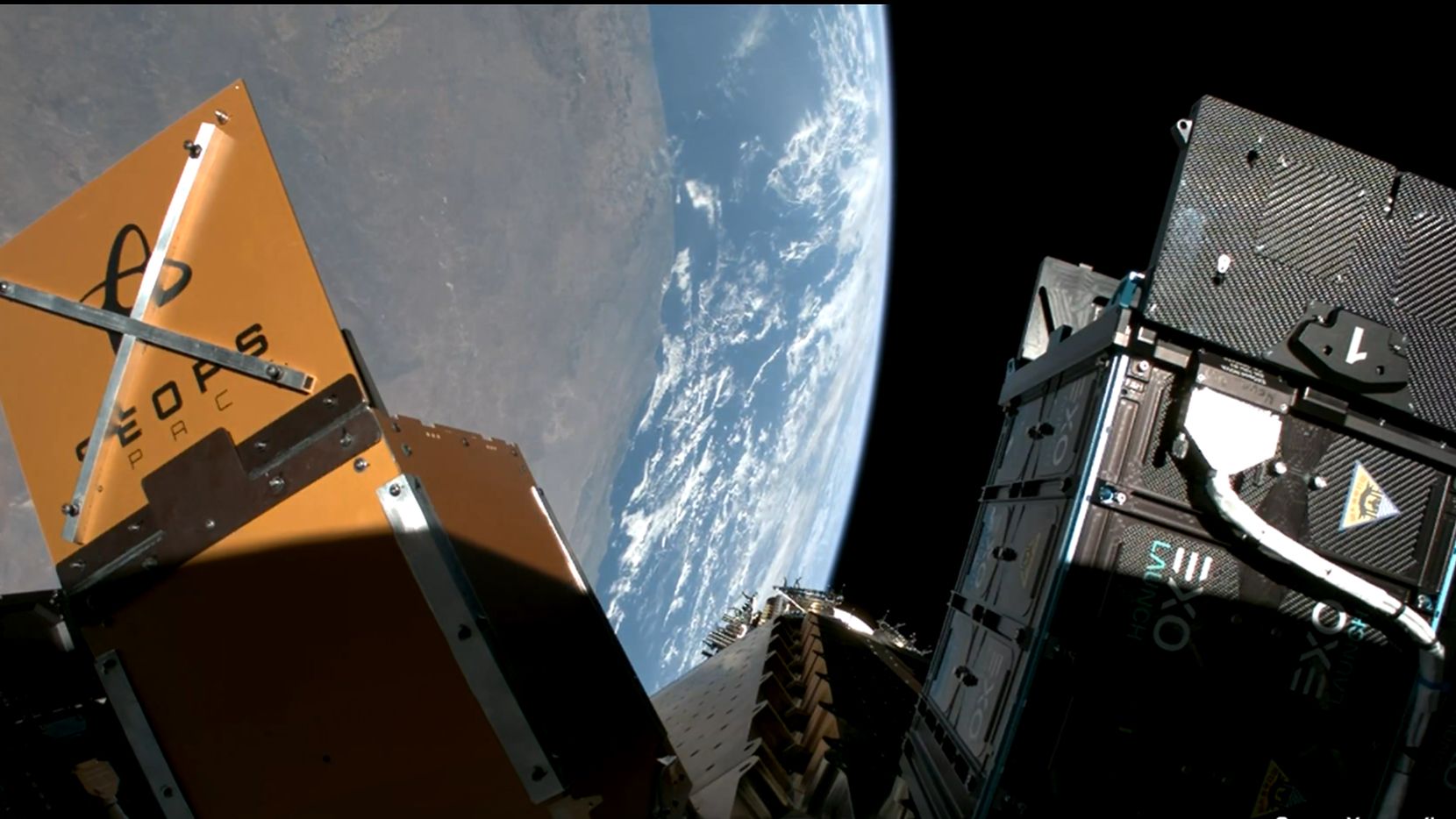 SpaceX just launched the 1st-ever nuclear-powered commercial satellite
Pre-read: Small spacecraft have usually inherited the solar-power constraint of large spacecraft: orbital darkness, deep-space distance, and permanently shadowed lunar terrain all turn energy into the binding limit on mission design. Nuclear power has been normal for selected government deep-space missions, but commercial spacecraft have had to clear a harder combination of launch approval, public safety scrutiny, integration procedures, and insurance risk before a radioactive power source could ride on a standard rideshare mission. The useful question is less whether this single CubeSat is powerful and more whether a private launch stack can normalize certified, low-output nuclear payloads as ordinary space hardware. That would widen the design space for sensors, clocks, communications relays, and lunar infrastructure that need continuous trickle power where solar plus batteries are brittle.
Summary: Space.com reports that SpaceX's Transporter-17 mission carried BOHR, City Labs' Betavoltaic Orbital High-Reliability satellite, to orbit on July 7. The payload is testing City Labs' NanoTritium betavoltaic source, which converts beta particles from tritium decay into electricity through a semiconductor; the satellite still uses solar power for its main bus, but the nuclear device powers the demonstration payload. The mission matters because it is framed as the first commercially built nuclear-powered satellite and the first FAA-approved nuclear launch under the post-2019 U.S. nuclear space-launch approval framework. City Labs and outside nuclear trade coverage describe the radiation profile as low enough for ordinary integration workflows, while the mission's Department of Defense funding points to the obvious early market: resilient national-security and cislunar systems that cannot depend on sunlight.
Pre-read: China's open-weight AI strategy has been a geopolitical workaround as much as a developer strategy: free, strong-enough models let Chinese labs spread technical dependence abroad even when U.S. export controls limit access to the newest chips. The same openness creates a control problem for Beijing because model weights, once released, are hard to recall, hard to geographically fence, and useful to foreign startups, researchers, and militaries alike. Epoch AI's public tracking has shown the U.S.-China model gap narrowing in waves rather than monotonically widening, so export control logic is moving from chips toward finished model capability. The strategic tradeoff is sharp: restrict access and China protects frontier capability; keep access open and Chinese models keep colonizing global developer workflows.
Summary: TIME, citing Reuters reporting, says Chinese officials have discussed limiting foreign access to the country's most advanced AI models, including systems from companies such as Alibaba and ByteDance. No final decision has been made, but options reportedly include barring public releases or keeping the most capable systems for domestic use. The article's strongest implication is that open-weight distribution has become too strategically successful to remain an uncomplicated advantage: it helped Chinese labs win global users by being cheap and available, but it also exports capability beyond Beijing's control. If restrictions arrive, U.S. firms may get relief from the lowest-cost competitive pressure while Chinese labs lose one of their most effective channels for global adoption.
 Meta turns image generation into ad infrastructure
Pre-read: Meta's AI economics are different from a pure model lab's: the company can turn image generation into consumer engagement, ad creative, and paid usage limits across apps that already have distribution. That makes the model less important as a standalone product than as infrastructure inside Instagram, WhatsApp, Meta AI, and Advantage Plus advertising.
Summary: CNBC reports that Meta released Muse Image, a new image-generation model available through the Meta AI app and site, WhatsApp direct messages, and Instagram Stories. Free usage will be capped, with users pushed either to wait for limits to reset or buy a subscription. Axios and The Verge coverage add that Muse Image is part of Meta's broader post-overhaul AI push and can power more than 30 AI effects across Meta apps. The advertising angle is the durable part: Meta plans to use the model inside advertiser-specific image-generation tools, meaning generative media is becoming part of the machinery that creates and tests commercial content, not only a consumer toy.
Pre-read: Subscription gaming promised smoother revenue and bigger audiences, but the accounting problem was always brutal: day-one access can increase playtime while weakening the retail sales signal that helps studios prove their own value. Microsoft's $68.7 billion Activision Blizzard acquisition also raised the fixed-cost burden just as the broader games market became more selective.
Summary: Bloomberg's story, syndicated by Yahoo Finance, says Xbox's large layoffs follow a failed streaming and Game Pass-centered strategy rather than a routine cost trim. Xbox said it would cut 3,200 roles and let go of several studios as it resets after overspending on teams, games, and content that did not convert into enough demand. Microsoft's own Xbox Wire post describes the move as the most significant restructure in Xbox history and says roughly 1,600 roles are being eliminated immediately, with more reductions planned through FY27. The shift points back toward fewer bets, stronger franchises, and hardware or owned IP where Microsoft can see a clearer return.
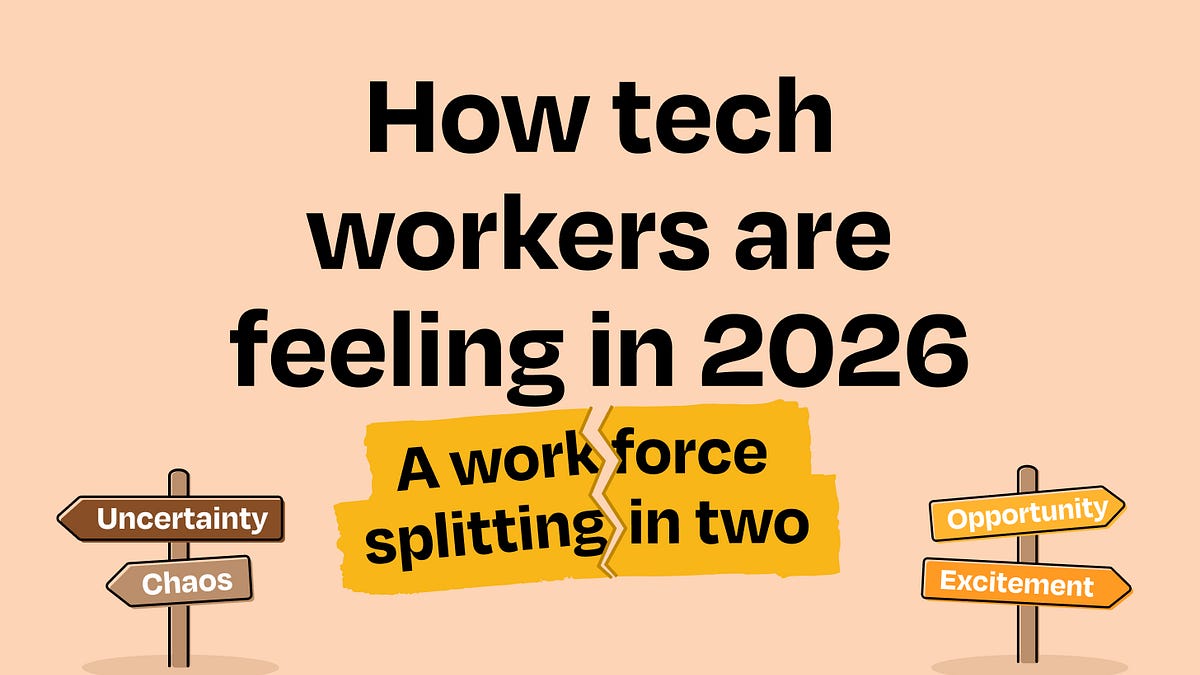 Tech morale is splitting around AI leverage
Pre-read: The labor-market question in tech has moved from whether AI improves individual throughput to who captures the surplus from that throughput. Workers who can convert AI into judgment, shipping speed, or leverage experience it as amplification; workers whose work is newly measurable, compressible, or substitutable experience the same technology as volatility.
Summary: Lenny's Newsletter reports that its 2026 tech-worker sentiment survey shows a workforce splitting into two realities: one group feels amplified by AI, while another feels shaken by it. TLDR's excerpt says burnout is rising, optimism is fading, and many respondents believe the industry is in chaos even as productivity appears higher. Lenny Rachitsky's public post about the survey says significant burnout rose from 44.7% to 55.7%, which gives the trend more weight than a vibes-only diagnosis. The useful takeaway is managerial, not therapeutic: AI adoption is changing the felt contract of tech work, and teams that treat productivity gains as pure headcount leverage may burn through trust faster than they capture output.
 Microsoft starts routing Copilot work in-house
Pre-read: AI application margins depend on inference routing: the model behind a feature can be swapped when quality, latency, privacy, or cost requirements change. Microsoft has a special incentive to do this because it both partners with OpenAI and competes to own the AI layer inside Office.
Summary: Bloomberg Law reports that Microsoft is replacing OpenAI and Anthropic models with its own AI models in some applications, including Excel and Outlook, as part of an effort to reduce AI costs. The Edge Markets' republication frames the change as a move inside software products rather than a wholesale break with outside labs. The practical signal is that even the best-distributed AI products are being optimized below the user-visible layer. If Microsoft's MAI models can handle routine Office prompts cheaply enough, frontier models become reserved for tasks where users can feel the difference.
 Cybercab needs a different compute envelope
Pre-read: A purpose-built robotaxi is a different hardware contract from a supervised consumer car: there is no fallback driver, no steering wheel, and much less tolerance for memory or compute bottlenecks in unusual scenes. Autonomy claims therefore become more credible or less credible based on the boring details of thermal headroom, memory capacity, redundancy, operations domain, and fleet support.
Summary: Not a Tesla App reports that production Cybercab units use a more powerful FSD computer than the Model 3 or Model Y, with increased onboard memory as the main disclosed change. The article ties that hardware to Tesla first-responder documentation describing an SAE Level 4 Autonomous Mode, meaning the vehicle is intended to operate without human intervention in its defined domain. The report is still an enthusiast-site exclusive, so treat the exact hardware specifics as provisional. The broader point is sound: a no-pedals, no-wheel robotaxi has to be engineered as a fleet robot, not as a consumer car running a better driver-assistance stack.
Pre-read: Driver monitoring is becoming a standard safety layer as cars take on more automation and regulators push down road deaths. The privacy issue is not the existence of a gaze sensor by itself; it is whether video, derived attention scores, or event logs become data exhaust for insurers, automakers, fleets, law enforcement, or product analytics.
Summary: All About Cookies reports that, starting July 7, 2026, every new car sold in the European Union must include a driver-monitoring camera aimed at the driver to detect distraction. Seeing Machines' earlier explainer on Advanced Driver Distraction Warning systems says the EU requirement applied to new vehicle types from July 2024 and expands to all newly registered vehicles from July 2026. The article argues that regulators and automakers have not made clear enough where the monitoring data goes after an alert. The safety case is straightforward; the governance case is less mature, especially as in-cabin sensing becomes a default feature rather than an option.
David Brooks' Atlantic essay is a mindset piece about agency under abundant machine intelligence. Its core claim is that the advantage shifts toward people who actively wrestle with AI to extend their own judgment and capability, rather than using it mainly to reduce effort. The piece is worth opening if you want a human-capital frame for AI that is less about job replacement forecasts and more about volition, taste, and self-directed improvement.
No-send regenerated ideation
The morning sources point to a more interesting pattern than any single headline: frontier systems are leaving the lab faster than the surrounding power, evidence, noise, privacy, and insurance layers can mature.
Thesis: Build the tamper-evident black box for robot fleets: a privacy-preserving event recorder that captures sensor summaries, model decisions, human takeover context, compute health, and incident evidence for autonomous cars, delivery robots, warehouse AMRs, and industrial inspection machines.
Source signals: Cybercab's no-wheel design makes autonomy a fleet-robot problem rather than a consumer-car feature. EU driver-monitoring rules expose the governance gap around in-cabin sensing. Microsoft's Copilot routing story shows that user-visible AI products already hide model-routing decisions underneath.
First wedge: Sell to supervised autonomy fleets and industrial AMR operators that need incident review, insurer reporting, and customer trust before regulators force a heavier standard.
Defensibility: The recorder gets stronger with every deployment because it learns failure taxonomies, insurer questions, regulator audit patterns, and fleet-specific evidence schemas. Incumbents can log their own stack, but cross-fleet trust infrastructure is harder for one OEM to own.
Self-critique: This dies if fleets refuse a neutral recorder or if insurers do not care before regulation arrives. The 60-day test is three paid design partners: one robotaxi/ADAS team, one warehouse AMR operator, and one insurer or broker willing to define the claim packet.
Thesis: Treat noise as a routable operating constraint for drones, eVTOLs, delivery robots, autonomous street equipment, and field robots. The product is a planning and compliance layer that predicts acoustic impact, proposes quieter routes or schedules, and produces city- and customer-facing evidence that the fleet is operating below negotiated thresholds.
Source signals: Concorde's commercial failure was partly a story about overland sonic-boom constraints. The shared source cache pointed to noise-aware motion-planning research for urban air mobility. EU driver cameras show how safety technology can create public backlash when governance lags deployment.
First wedge: Start with drone inspection or campus delivery fleets that already lose routes to complaints. Sell a per-site planning subscription plus acoustic baseline surveys.
Defensibility: The moat is local acoustic maps, complaint-to-telemetry data, permitting workflows, and operational proof that a route is socially tolerable. This is more defensible than generic routing because every city, surface, building canyon, and vehicle morphology changes the sound profile.
Self-critique: The market may be too early if drone/eVTOL volume remains thin. The wedge has to be a noisy machine category with real deployments now: industrial drones, yard trucks, street sweepers, campus robots, or warehouse-adjacent outdoor AMRs.
Thesis: Create an application-layer runtime for long-duration field robots and remote sensor systems that treats energy as a first-class planning variable: mission timing, route choice, payload duty cycle, sensor sampling, charging, solar exposure, battery health, and eventually certified trickle-power modules.
Source signals: The SpaceX/City Labs launch shows commercial nuclear trickle power entering ordinary space infrastructure. Cybercab's compute envelope story shows that autonomy credibility depends on boring physical headroom. Remote robots in utilities, defense, agriculture, mining, and disaster response fail in similarly unglamorous ways: energy, thermal limits, and retrieval cost.
First wedge: Start with utilities or security operators running remote inspection robots, perimeter sensors, or unmanned stations where truck rolls are expensive. Charge per deployed asset and per avoided service visit.
Defensibility: Every deployment builds a map of terrain, weather, degradation, duty-cycle tradeoffs, and mission outcomes. The company becomes the operating layer that tells machines when not to act, which is often more valuable than adding a larger battery.
Self-critique: The nuclear angle is future-facing, not the wedge. If version one cannot save money with today's batteries, solar, scheduling, and predictive maintenance, the company is a research fantasy. The first month should prove one remote asset can stay useful longer with software alone.