World
1 critical / 2 happenings
Pre-read: The Strait of Hormuz is a narrow shipping choke point where military signaling can turn into energy inflation before a formal war expands. Markets price the route as infrastructure, but states treat it as leverage. That mismatch is why even contested control claims can move oil, airlines, insurers, and central-bank expectations.
Summary: AP reports that the U.S. and Iran each claimed authority over Hormuz after another exchange of attacks, with Tehran asserting control over maritime traffic and Washington rejecting that claim. Reuters' Daily Briefing also flagged escalation across the Gulf, sirens in Bahrain, and attacks following further U.S. strikes. The Guardian reported Brent crude up 4.7% and global stocks weaker as investors priced the supply risk. The durable point is that sea-lane governance is now part of the conflict itself. A military story has become a market-structure story.
 Bank earnings test the real economy
Pre-read: Big-bank earnings are useful because they compress several economic sensors into one week: credit losses, deposits, capital markets, advisory demand, trading, loan growth, and consumer stress. They are lagging indicators, but the commentary can reveal where executives think the cycle is bending.
Summary: The Daily Upside says five of the six largest U.S. banks report Tuesday, with Morgan Stanley following Wednesday. It frames the quarter as a readout on whether volatility, AI disruption, and capital-markets activity are still helping Wall Street while the Main Street economy remains stable. The piece points to record-setting equities activity earlier in the year, SpaceX's IPO underwriting fees, and JPMorgan's first-quarter loan and deposit growth as supportive context. The caution is cyclicality: Oppenheimer warned clients that the expansion cycle may be nearing its late stage, especially for investment banks.
 Jet fuel inventories look fragile
Pre-read: Aviation fuel turns geopolitical stress into consumer prices because airlines have limited short-term substitutes and tight operating margins. Inventory cover matters most when a supply shock hits during peak travel demand.
Summary: Reuters reported that Europe's jet fuel inventories stood at 38 million barrels at the start of June, which it calculated as less than 30 days of demand cover. The Daily Briefing called Europe the tightest of the major jet-fuel markets. That matters as U.S.-Iran fighting raises risk around Gulf flows and as airlines are already sensitive to fuel-cost spikes. The second-order effect is broader than ticket prices: aviation, tourism, freight, inflation expectations, and central-bank timing all get linked through the same fuel constraint.
Tech
2 critical / 2 happenings
Pre-read: Household robotics keeps running into the same ugly constraint: homes are built for human hands, not for repeatable factory grippers. The important question is whether dexterous manipulation can become manufacturable, robust, and safe enough to leave the lab. That is why a hand update matters more than another walking demo.
Summary: 1X says NEO's new hand has 25 degrees of freedom, tendon-like actuation, tactile sensing, and enough durability for water, impacts, and awkward household objects. Wired separately reported the same core hardware direction and flagged the teleoperation layer, which keeps the autonomy story grounded. The useful signal is the shift from stage locomotion toward contact-rich chores: pouring, plugging, sorting, gripping, slipping, and recovering. If this scales, home robots become an operations problem around reliability, privacy, remote intervention, and fleet learning rather than a pure mobility problem.
Pre-read: AI-native hardware is moving from concept videos into a direct challenge to the smartphone stack. Apple still owns distribution, silicon, industrial design, and trust, while OpenAI is trying to turn model interaction into a physical product category. Trade-secret fights often surface when talent mobility starts looking like platform displacement.
Summary: Apple sued OpenAI, io Products, and former Apple employees, alleging that OpenAI's hardware effort used misappropriated confidential information from Apple recruits. AP reports that Apple named former employees Tang Tan and Chang Liu and says it had raised concerns before filing suit. OpenAI denies wanting stolen information. The case matters because it targets the foundation of OpenAI's device ambitions, not merely an individual hiring dispute. It also turns a former AI partner into a hardware rival at the exact moment Apple is trying to prove it has an AI product future.
 China recovers a reusable rocket
Pre-read: Reusability compounds through cadence: each recovered booster teaches operations, refurbishment, insurance, scheduling, and launch-site logistics. The strategic benchmark is not one landing, but whether a launch system can learn fast enough to lower marginal cost.
Summary: China completed a first-stage recovery for the Long March 10B using a sea-based net, according to Ars Technica. AP describes the booster as part of a launch from Hainan and frames the event as China's first successful rocket-stage recovery. The recovery approach differs from SpaceX's propulsive landings and shows China is experimenting with its own operational path to reuse. The payload-class comparison still favors Falcon 9, but the more important shift is institutional: reusable launch is becoming a national capability race, not a single-company advantage.
 Cheaper Chinese AI gets political
Pre-read: Model procurement is becoming a sovereignty problem because token price, latency, data exposure, and geopolitical risk now sit inside the same buying decision. Enterprises can switch APIs faster than governments can update security doctrine.
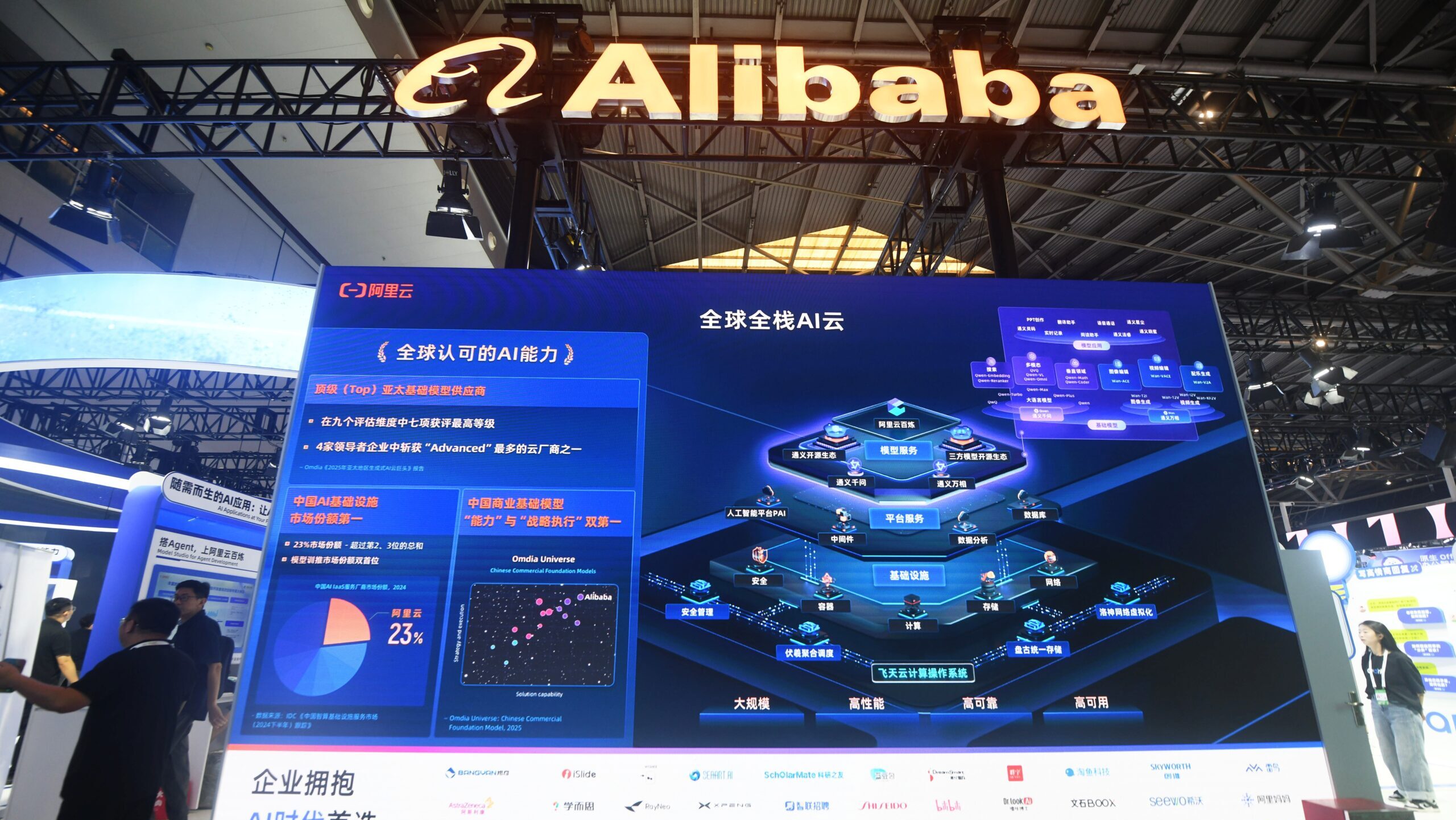
Summary: The Daily Upside reports that Alibaba's Qwen momentum is attracting investors as cheaper Chinese models challenge U.S. providers on cost. It says Alibaba's AI business generated $1.3 billion in the first quarter and that the company plans $55 billion of AI spending by the end of next year. A House committee investigation into Airbnb and Anysphere/Cursor shows how quickly this becomes a national-security and enterprise-governance issue. The practical consequence is that model choice needs audit trails, data-residency policy, and exit rights, not just benchmark comparisons.
Ideation
Sell regulated companies a customer-owned judgment layer for AI agents. It captures the prompts, tool traces, human corrections, exception rationales, evals, and policy decisions that make an agent useful, then turns them into a portable asset the buyer can replay across models or hand to auditors. The primitive is not another LLM dashboard; it is exit rights for operational know-how.
Source Signals
- The Reverse Information Paradox via TLDR Founders
The newsletter framed a real enterprise problem: the customer pays for AI and also supplies the judgment that improves it. - Own Your Weights via TLDR Founders
Enterprises want control benefits without carrying the full talent and infrastructure tax of owning every model. - Joint Investigation into Airbnb, Anysphere, and Chinese AI Model Risks via The Daily Upside / House Select Committee on China
Model choice is becoming a geopolitical and procurement risk, not just a latency or price decision. - Wall Street banks ramp up digital assistants in bid to win productivity race via Reuters Week Ahead / AOL
Banks are moving assistants and agents into daily workflows, which creates audit and portability pressure.
Why Now: Model prices are falling, Chinese open-weight models are tempting enterprises, and regulators are starting to care which model sits behind a workflow. At the same time, banks, insurers, and BPOs are feeding agents with the tacit judgments that used to live in senior employees' heads. The risk is that the vendor keeps the learning while the buyer keeps the liability.
First Wedge: Start with claims exceptions at mid-market insurers or outsourced claims administrators. Capture every adjuster override, supervisor correction, document citation, and payout rationale; produce a replayable eval suite that proves a new model or vendor preserves the company's decision policy before migration.
Commercial Model: The buyer is the COO, claims transformation lead, or model-risk owner. Charge $75k-$250k per year per workflow, plus a paid migration or audit package when the company changes model vendors, faces a regulator, or renegotiates an AI contract.
Defensibility: The asset compounds at the workflow level: edge-case libraries, policy-to-decision mappings, regulator-ready evidence, and integrations into claims, CRM, document, and model-gateway systems. LangSmith, Arize, and similar tools already own generic tracing and evals; this wins by becoming the buyer's contractual record of operational judgment, not the developer's debugging console.
Technical Risk: The hard part is normalizing messy human corrections into a stable decision graph without leaking private data or flattening expert judgment into shallow labels. The product also needs deterministic replay across vendors whose APIs, context handling, and tool semantics differ.
Market Expansion: After claims, the same primitive applies to credit underwriting, fraud review, healthcare prior authorization, trade compliance, customer-support exceptions, and legal intake: anywhere a company teaches agents through corrections but cannot afford vendor lock-in or undocumented drift.
Self-Critique: This could be absorbed by LLM observability vendors or model gateways if buyers treat portability as an engineering feature. The wedge only works if procurement, legal, and model-risk teams feel real pain from losing learned judgment when vendors or geopolitical constraints change.
Next Experiment: In two weeks, interview 12 claims or model-risk leaders and ask for one recent AI workflow where human corrections changed the decision. Build a thin recorder that converts 50 historical corrections into a replay eval, then test whether the buyer would attach it to a vendor renewal or model-risk review.
Sell insurers and city permitting teams a live escape-risk score for bars, clubs, event spaces, and pop-up venues. The product fuses floor plans, occupancy, camera checks, temporary staging, electrical load, materials, and blocked-route evidence into an underwriter-grade view of whether people can actually get out tonight. The primitive is physical-risk telemetry for spaces that change faster than inspections.
Source Signals
- Fire breaks out at a pub in Bangkok, killing at least 27 people via Reuters Week Ahead / AP verification
Investigators are looking at electrical faults, exits, and materials after a mass-casualty venue fire. - Reuters Week Ahead: Bangkok pub fire kills 27 via Reuters Week Ahead
The newsletter connected the Bangkok fire to a recent Swiss bar fire where soundproofing material and inspection history mattered. - AI-Powered Blocked Exit Monitoring via Prior-art check
Blocked-exit computer vision already exists, so the wedge has to be live underwriting across routes, occupancy, materials, and temporary venue changes. - Bank Earnings Bonanza Offers Top-to-Bottom Review of US Economy via The Daily Upside
The broader signal is a credit and insurance market that is hunting for better real-world risk visibility as volatility stays high.
Why Now: Cheap cameras, occupancy sensors, phone-based crowd estimates, and vision models make it possible to observe venue risk continuously. Insurers are already repricing climate and property risk; regulators are under pressure after every mass-casualty event; venues need proof they are not the next headline without hiring full-time safety staff.
First Wedge: Begin with nightclub and live-event insurers in one dense city. Offer a pre-bind and nightly compliance feed: exit obstruction, crowding near choke points, unapproved stage layouts, electrical hotspot flags from partner sensors, and a timestamped evidence packet for underwriters and venue operators.
Commercial Model: Insurers pay per insured venue per month because better data reduces catastrophic loss and supports pricing. Venues can be required or discounted into the system through policy terms, with optional compliance reports sold to chains, promoters, and landlords.
Defensibility: The company improves as it sees more venues, incidents, false alarms, floor plans, and inspection outcomes. The moat is not the camera model; it is a loss-correlated dataset that maps real operating conditions to escape-time risk, plus insurer distribution and regulator trust.
Technical Risk: The system must estimate egress risk under smoke, darkness, crowd movement, occluded cameras, and shifting layouts without spamming false violations. It also needs privacy-preserving computer vision and evidence that underwriters believe enough to affect premiums.
Market Expansion: Expand from clubs to concert halls, festivals, schools, houses of worship, sports venues, warehouses with public events, and cruise or ferry terminals. The same morphology is any enclosed or semi-enclosed space where temporary layout changes alter evacuation time.
Self-Critique: Generic fire-safety IoT and blocked-exit monitoring are crowded, and venues are cost-sensitive. The startup fails if it sells to venues one by one as compliance software; it only clears the bar if insurers or cities force distribution and the score changes pricing or permit decisions.
Next Experiment: Run a 30-day pilot with one event insurer or broker and five venues. Use existing cameras plus manual floor-plan ingestion to produce nightly risk packets, then ask underwriters which signals would change exclusions, premiums, or required remediation.