World
2 critical / 3 happenings
Pre-read: The Strait of Hormuz is a narrow chokepoint where military escalation immediately becomes energy-market risk. A policy move that changes shipping access or protection costs can ripple through oil, insurance, and inflation expectations faster than a conventional battlefield update. This article clarifies whether the confrontation is moving from strikes to control of commercial passage.
Summary: Reuters reports that Iran fired ballistic missiles at a US air base in Jordan and that the United States attacked Iranian targets for five hours in a fight over the Strait of Hormuz. The newsletter says oil prices moved to four-week highs as President Trump reinstated a blockade of Iranian shipping and proposed a 20% fee to guard the waterway. Reuters also cites a Reuters/Ipsos poll finding that four in five Americans expect the war with Iran to drag on. The market signal is direct: shipping control, not only military damage, is now part of the conflict's pressure system.
Pre-read: Vaccine policy is a high-trust institution built from advisory committees, schedules, procurement, liability rules, and state implementation. Personnel changes matter because they can alter the default architecture before Congress or courts fully react. The useful question is how far administrative control can move a public-health system.
Summary: Reuters says Robert F. Kennedy Jr., health secretary since 2025, has pushed once-unthinkable proposals inside the Trump administration. Based on interviews with 16 current and former officials, the report describes discussions about spending billions to seek a vaccine-autism link, empowering vaccine skeptics, and even eliminating the federal childhood immunization schedule. The officials spoke anonymously and described efforts that went further than previously known. The piece matters because it maps institutional pressure from inside the health department, rather than treating vaccine policy as a public messaging fight alone.
Pre-read: AI infrastructure is becoming a local permitting fight wherever grid capacity can't meet compute demand. Gas turbines move fast, but they also turn model scaling into air-quality exposure for nearby residents.
Summary: Reuters reports that xAI has installed 59 natural-gas turbines for a data-center project, about double what the company has publicly acknowledged. The article frames the turbines as part of a dispute over whether the AI boom is placing disproportionate pollution burdens on communities of color. The newsletter identifies the facility as being in Southaven, Mississippi, and notes that Reuters photographed the turbine site. The durable point is that AI compute expansion is creating a second politics around energy siting, emissions disclosure, and local consent.
Pre-read: German automakers are being squeezed by China's EV speed, high European input costs, and tariff exposure in the US. Volkswagen is the cleanest stress test because its scale once looked like protection.
Summary: The Daily Upside says Volkswagen CEO Oliver Blume told staff the company could double planned layoffs from 50,000 to 100,000. The newsletter cites an 8.6% year-over-year drop in second-quarter global sales, including a 36% decline in China, and says Blume estimates a roughly 20% cost disadvantage versus peers. It also says US auto tariffs could cut $5.9 billion from annual operating profit. VW is increasing robotics and automation investment and weighing alternatives for four German plants, including possible defense-industry partnerships.
Pre-read: Lab-grown diamonds attack mined diamonds at the level of price discovery and cultural scarcity. The incumbent problem is that marketing can defend meaning only so long when the physical substitute keeps improving.
Summary: The Daily Upside says De Beers is shutting South Africa's Venetia mine for two years even though it produces 40% of South Africa's diamonds and 10% of De Beers' own supply. The company has cut $100 million in annual overhead since 2024, while parent Anglo American has written down the diamond business three times in three years. Lab-made diamonds have grown from less than 1% of global diamond sales a decade ago to more than one-fifth today. De Beers also wound down Lightbox, its synthetic-diamond venture, leaving mined scarcity as both its brand asset and strategic constraint.
Tech
2 critical / 2 happenings
 The 6 wildest claims in Apple's lawsuit against OpenAI
Pre-read: AI hardware now sits at the intersection of recruiting, supply-chain memory, and trade-secret law. Clean-room discipline matters more when a lab hires hundreds of people from the incumbent whose device category it wants to enter. The useful frame is provenance: can a frontier lab prove its product design was built without contaminated knowledge?
Summary: The Verge breaks down Apple's suit accusing OpenAI's hardware group of using confidential Apple information after acquiring Jony Ive's Io Products and hiring many former Apple employees. The allegations include supplier information, confidential files, and coaching employees on how to evade Apple security procedures. The Daily Upside notes that OpenAI still reportedly expects to announce a device this year and launch in 2027, so the case could matter before trial by slowing recruiting and forcing design process scrutiny. The transferable lesson is that AI-device competition is creating an evidentiary layer around talent flows, not just a product race.
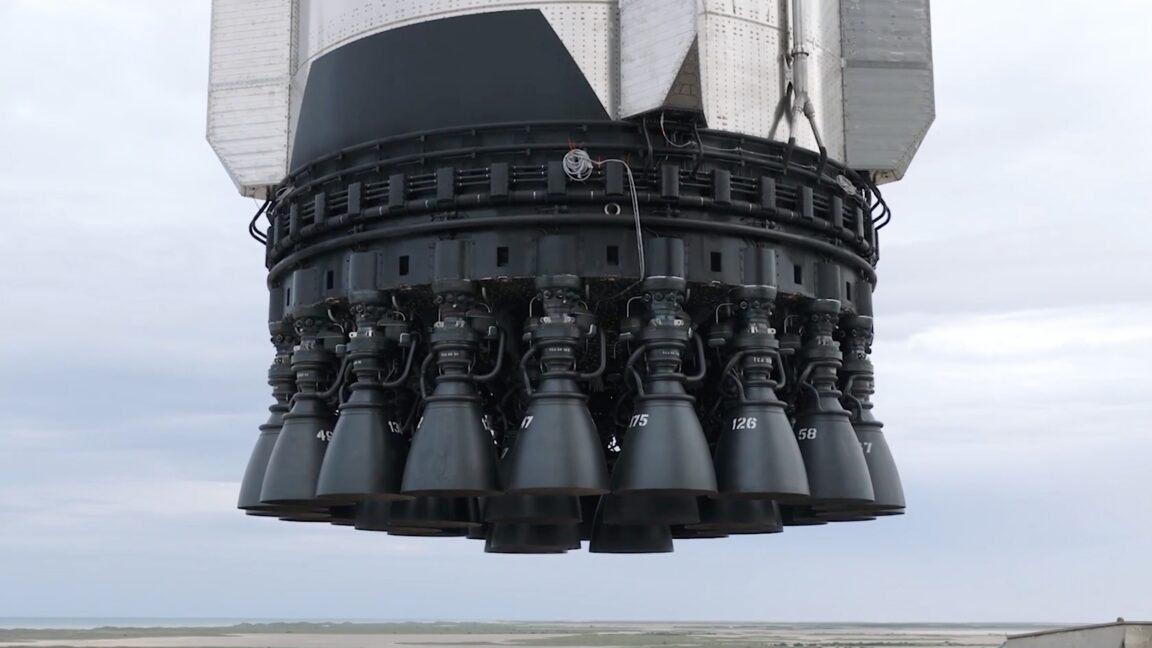 SpaceX is gearing up for Starship's 13th test flight later this week
Pre-read: Starship matters because it turns launch cadence into infrastructure strategy. Starlink V3 is the payload-side version of that logic: bigger satellites, heavier lift, and optical mesh links all compound when launches become repeatable. Watch less for a single spectacular flight and more for whether the system starts behaving like a deployable logistics pipeline.
Summary: Ars Technica reports that SpaceX is preparing Starship's 13th test flight, with real Starlink V3 test satellites in the cargo bay after the end of an FAA-required investigation. The satellites won't join the operational Starlink network; engineers plan to test brief laser links with other spacecraft before the payloads reenter and burn up. That makes the flight a dual test of vehicle recovery and orbital-network plumbing. If both improve, SpaceX's advantage shifts further from rockets alone toward a vertically integrated communications deployment machine.
 Apple makes Siri AI testable
Pre-read: Apple Intelligence becomes strategically different when ordinary users and app developers can test agentic behaviors against real app surfaces. The important adjacent system is App Intents, Apple's contract for exposing actions and content to Siri.
Summary: The Verge says Apple's iOS 27 public beta is out, with Siri AI available for supported devices and broader platform betas landing at the same time. TLDR's summary says Siri can maintain an ongoing conversation, understand onscreen context, take actions in apps, and answer broader questions. Apple Intelligence features still require newer iPhones, which keeps the rollout tied to hardware mix. The near-term developer question is whether apps expose useful, safe actions through App Intents quickly enough for Siri to become more than a better command line for the phone.
 Apple speech narrows Whisper's edge
Pre-read: On-device speech is a distribution problem as much as a model problem. If the default OS API becomes accurate enough, many apps stop needing server inference for everyday English transcription.
Summary: In a benchmark linked by TLDR, Inscribe reports that Apple's SpeechAnalyzer cuts word error rate by roughly 3.5x to 4x versus SFSpeechRecognizer on the same audio. It also beats Whisper Small in English while using about a third of the compute time per second of audio. Whisper still wins on portability and multilingual coverage, but Apple hardware now has a stronger native path for private, low-latency dictation. That changes the build-versus-buy calculus for Mac and iOS apps whose voice features don't need cross-platform model control.
Ideation
Sell legal, security, and R&D leaders a system that proves a new AI hardware or robotics product was built without contaminated competitor knowledge. The product watches the risky moments: recruiting, offboarding, supplier conversations, design reviews, CAD imports, model-assisted research, and post-hire work. It does not try to stop people from knowing what they know. It creates a clean-room workflow and evidence graph that lets a company quarantine tainted inputs, show what influenced each design decision, and keep moving when it hires from Apple, Tesla, SpaceX, defense primes, or another lab.
Source Signals
- Apple's lawsuit against OpenAI over alleged hardware trade-secret theft via The Daily Upside / AP verification
The lawsuit makes hardware talent transfer itself a product risk: a competitor can attack the provenance of the device, not just individual files. - The 6 wildest claims in Apple's lawsuit against OpenAI via TLDR / The Verge
The alleged weak points are exactly operational: interviews, departure procedures, supplier knowledge, internal files, and post-employment access. - The Invisible Insider: How AI Agents Enable Undetectable Trade Secret Theft via Broader verification
AI tools make knowledge easier to summarize, transform, and reuse, which means conventional DLP logs are no longer enough evidence. - Apple's public betas for iOS 27 and more are out now via TLDR / The Verge
As operating systems expose more actions and context to AI, the same provenance problem spreads from files to model-mediated workflows.
Why Now: Frontier AI is moving from chat into devices, robots, cars, factories, satellites, and medical hardware. The talent pool is small, so every serious team will hire from competitors. At the same time, AI assistants make it easy to turn memory, screenshots, old design habits, and supplier lore into new artifacts. The scarce primitive is no longer access control. It is defensible proof that a product's idea chain is clean enough to survive diligence, partnership review, and litigation.
First Wedge: Start with 20- to 200-person AI hardware, robotics, and defense-tech teams hiring senior people from direct competitors. The first product is a clean-room onboarding and design-review lane: pre-hire risk questionnaires, source-of-knowledge attestations, restricted design rooms, AI-assisted similarity checks against quarantined prior art, supplier-contact controls, and an exportable evidence packet for counsel and investors.
Commercial Model: The buyer is general counsel or the security/R&D executive who owns deal risk. Charge an annual platform fee by number of sensitive contributors, plus onboarding packages for high-risk hires and diligence packets for fundraises, enterprise contracts, and strategic partnerships. Budget exists because one injunction, failed acquisition review, or blocked customer contract is more expensive than a year of tooling.
Defensibility: The data asset is a provenance graph across people, artifacts, suppliers, prompts, reviews, and decisions. Each deployment teaches the system which work patterns look clean, which require quarantine, and which evidence outside counsel accepts. Incumbent DLP vendors can see files leaving; law firms can write policy. The wedge is the operational middle: making engineers and designers ship through a clean-room process without turning every review into legal theater.
Technical Risk: The hard part is detecting risky influence without collecting the competitor's secrets or overblocking normal expert work. The system needs low-friction attestation, artifact lineage, semantic similarity checks, and counsel-grade audit trails while preserving privilege and not becoming a giant repository of sensitive IP.
Market Expansion: After AI hardware, expand into robotics, autonomous vehicles, drones, defense electronics, biotech process development, chip design, and any sector where small teams hire from incumbents and product knowledge lives in tacit workflows. The same provenance layer can later cover regulated agent actions and supplier-controlled AI workflows.
Self-Critique: This can fail if teams see it as a legal services workflow rather than software, or if buyers only care after they are sued. It is also close enough to DLP, GRC, and trade-secret management that the first wedge must be painfully specific: high-risk frontier hardware hires and design-room provenance, not generic IP protection.
Next Experiment: In two weeks, interview five GCs or outside counsel who have handled trade-secret diligence for hardware or AI companies, plus five founders hiring from incumbents. Offer a manual clean-room onboarding packet for one sensitive hire, then measure whether counsel would attach it to diligence materials or require it before approving the hire's work on a product design.