World
2 critical / 2 happenings
Pre-read: Sudan's civil war is a logistics war as much as a battlefield war. The U.N. says the conflict has produced one of the world's worst displacement crises, and the U.S. State Department has said the RSF and allied militias committed genocide in Darfur. Supply routes, aircraft ownership, and contractors matter because they can keep armed groups viable while responsibility stays blurry.
Summary: Reuters traced three aging Boeing aircraft flying from N'Djamena, Chad, to logistics hubs used by the Rapid Support Forces, including Kufrah in Libya and Nyala in Sudan. The planes were operated by companies tied to Steven Shaulis, a 63-year-old U.S. Army Special Forces veteran whose Singapore-based CADG and related firms have held U.S. and U.N. contracts for more than two decades. Reuters says Shaulis-controlled companies have earned at least $419 million from American taxpayers through military and foreign-aid projects. The investigation does not merely identify suspicious flights; it shows how contracting networks, shell ownership, and regional air corridors can connect Western-funded business history to a force accused of atrocities. It is the strongest World item in the window because it reveals hidden infrastructure behind a war most readers only see through casualty counts.
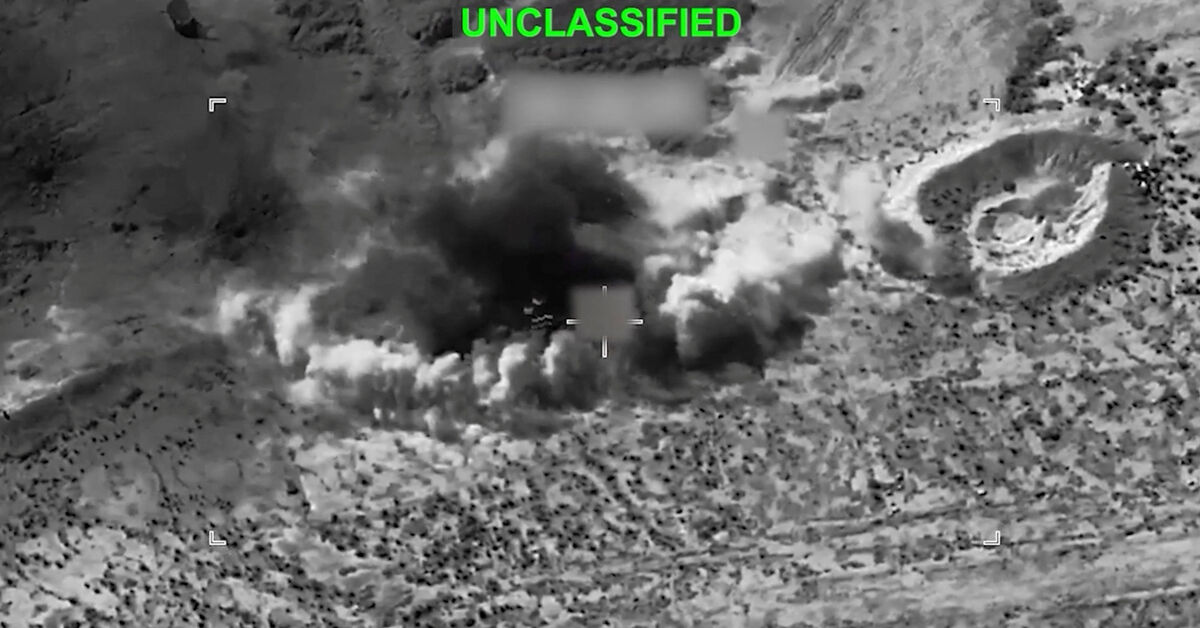 US launches new wave of strikes on Iran
Pre-read: The Strait of Hormuz is a small geography with global leverage: the U.S. Energy Information Administration says it has carried roughly one-fifth of global oil consumption in seaborne flows. Bab el-Mandeb is the second choke point in the same escalation map, linking the Red Sea to the Gulf of Aden and therefore to Suez-linked trade. When both enter the threat model, the conflict becomes an energy-market and shipping-insurance event, not only a military exchange.
Summary: Reuters reports that the U.S. began a new wave of strikes against Iran after reimposing a naval blockade of Iranian ports. Iran's Revolutionary Guard threatened to close additional export corridors that benefit the U.S. and its allies, while Tehran signaled it could use Houthi allies in Yemen to pressure Bab el-Mandeb after choking shipping through Hormuz. The article frames the escalation as a contest over energy arteries, not only target lists. Markets may absorb one round of strikes, but insurers, shippers, Gulf governments, and Asian importers have to price a wider corridor risk. The key update is that the conflict's leverage is spreading from a single chokepoint toward a network of maritime routes.
 Warsh stays hawkish after softer CPI
Pre-read: The Fed's inflation target is still 2%, so a cooler monthly CPI print can reduce urgency without ending the policy problem. Energy shocks also matter because headline relief can reverse quickly when oil moves.
Summary: The Daily Upside reports that June consumer prices rose 3.5%, below May's 4.2% pace and below analyst expectations. CME's FedWatch tool put the chance of a July 29 rate hike at 16.6% around midday Tuesday, with traders mostly expecting the Fed to hold steady. New Fed Chair Kevin Warsh told Congress that policymakers have no tolerance for high inflation and framed monetary policy as the central bank's core job. The complication is oil: prices surged as the U.S.-Iran conflict escalated, threatening to undo part of the gasoline-price relief in the CPI data. The practical read is that Warsh has room to wait, but he has not given markets a dovish pivot. Inflation is cooling enough to delay a hike, while geopolitics keeps the next print fragile.
Pre-read: Western water politics increasingly sits at the intersection of agriculture, housing, semiconductor fabs, solar buildouts, and data centers. The Bureau of Reclamation's Colorado River work shows how federal water management now has to balance basin-wide shortages against local economic development.
Summary: Reuters reports that drought across the U.S. West is pitting farmers and ranchers against towns, suburbs, and industrial users. The story's durable point is competition: the same scarce water has to support food production, residential growth, solar projects, semiconductor plants, and data centers. That makes drought an industrial-policy constraint, not only an environmental story. Local fights over wells, reservoirs, and allocations can slow projects that look strategic from Washington or Wall Street. The article also pairs cleanly with the New York data-center pause: AI and advanced manufacturing need physical inputs, and communities are starting to price those inputs politically.
Tech
2 critical / 2 happenings
 The Tower Keeps Rising
Pre-read: AI coding gains are still mostly measured at the individual-task level: GitHub's controlled Copilot study found developers finished a task 55% faster. Larger software systems fail in a different place: DORA's research treats loosely coupled architecture and team coordination as delivery constraints, because local speed can make shared models decay faster. This essay is worth opening because it names the coordination tax that AI agents can hide.
Summary: Armin Ronacher argues that AI-assisted coding can let construction continue after human understanding has already fragmented. The piece uses Babel as a metaphor for software architecture: the bricks are still there, but the shared language that lets people coordinate over boundaries, invariants, ownership, and intent is disappearing. Agents remove the friction that once forced engineers to read, ask, negotiate, and internalize adjacent context. The danger is subtle because the code can compile and tests can pass while the team loses the model needed to reason together. The essay is strongest as an architectural warning: AI raises individual throughput while making explicit design language, code review discipline, and ownership boundaries more important.
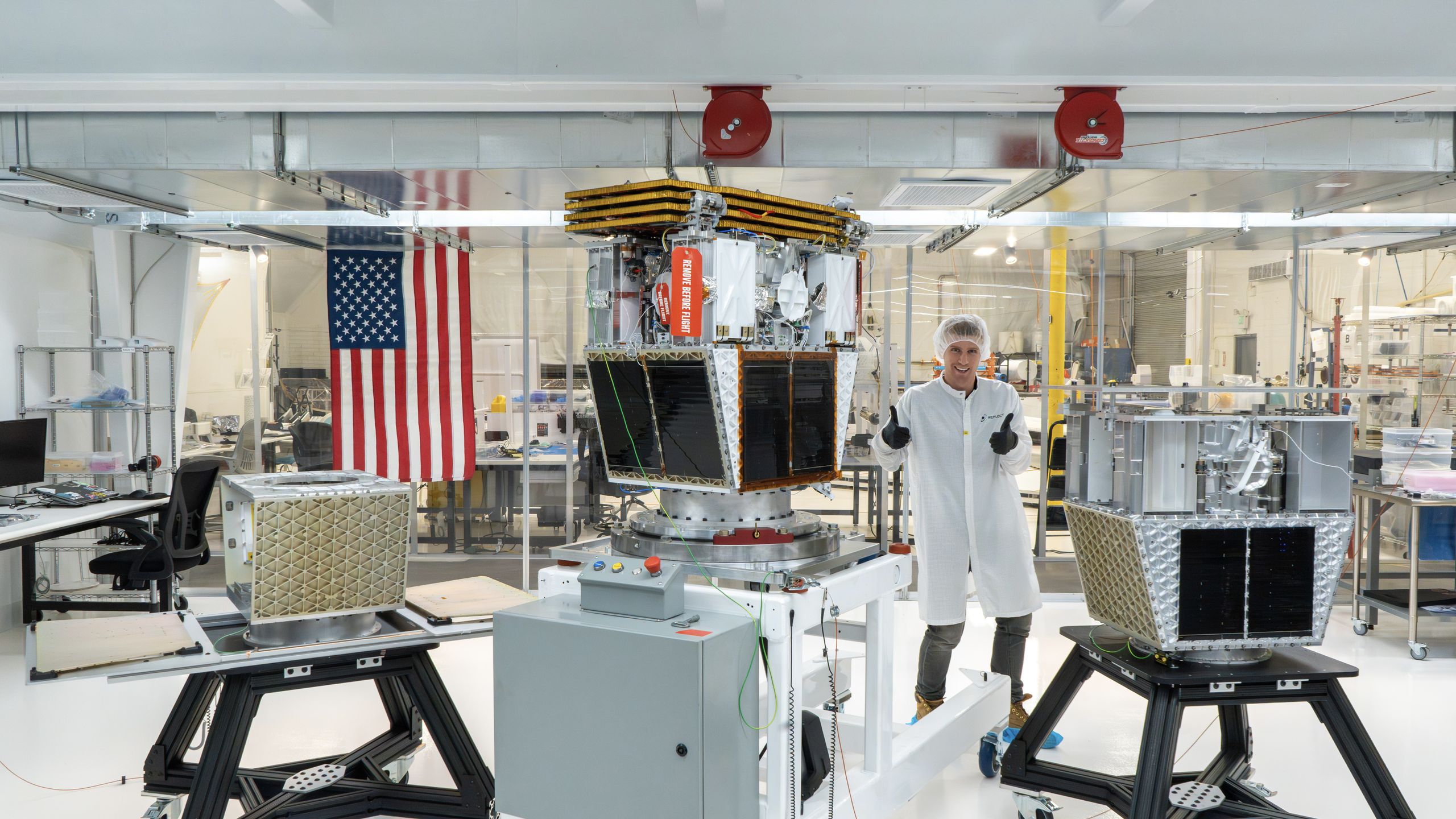 Reflect Orbital just got permission to launch its first space mirror
Pre-read: Low Earth orbit is becoming an operating environment for services that affect people on the ground, not just a place for communications and imaging. Astronomers have already organized around satellite brightness through the IAU Centre for the Protection of the Dark and Quiet Sky, and environmental groups such as DarkSky treat artificial night lighting as an ecological issue. A company that sells sunlight on demand therefore has to win a permission fight as much as an engineering one.
Summary: Space.com reports that the FCC licensed Reflect Orbital to launch and operate Eärendil-1, a demonstration satellite with a roughly 60-foot reflective surface. The company says the craft will test whether reflected sunlight can be directed to customers for uses such as emergency response, construction, and agriculture. Reflect Orbital's ambition is much larger than one test vehicle: it has discussed operating 50,000 or more mirror satellites in low Earth orbit by 2035. The article makes the project feel genuinely sci-fi, but the sharper signal is regulatory. Programmable illumination turns the night sky into shared infrastructure, so externalities around astronomy, wildlife, aviation, and local consent may become the real bottleneck.
 AI tokens need operating discipline
Pre-read: AI spend is moving from novelty budget to operating line item. The FinOps Foundation already frames cloud cost as a governance discipline built around accountability, measurement, and optimization; token spend is starting to need the same treatment because agentic workflows can multiply work invisibly.
Summary: George Sivulka argues that tokens behave less like cheap compute and more like unmanaged employees. Poorly scoped agents create loops: they retry, repair, replan, and spend more tokens because the human never articulated the task cleanly. The useful concept is not that tokens are expensive in isolation, but that AI scales dysfunction instantly. The article maps agent failures onto familiar organizational failures: vague delegation, headcount bloat, bad context, weak evaluation, and missing management systems. It is a founder-friendly piece with some sweeping language, but the operating lesson is durable. Treat agent budgets, prompts, evals, and workflow ownership as management primitives before autonomous work becomes another way to generate invisible overhead.
 New York pauses hyperscale AI data centers
Pre-read: AI infrastructure is colliding with grid politics. The Electric Power Research Institute has warned that data centers could consume a materially larger share of U.S. electricity as AI demand grows, while local opposition increasingly focuses on power bills, water, land use, and noise.
Summary: New York imposed a one-year pause on new hyperscale AI data centers above 50 megawatts. The Guardian reports that Governor Kathy Hochul used the moratorium to give regulators time to write standards for energy use, water use, environmental impact, zoning, and community benefit. The order is narrower than a more aggressive legislative proposal, but it is still the first statewide pause of its kind. This matters because AI infrastructure is turning from a capital-expenditure race into a permitting and legitimacy race. Developers can raise money and order GPUs, but the projects still need power, water, transmission, local acceptance, and a political story that survives utility-bill pressure.
Ideation
Sell data-center developers and utilities a permitting evidence twin: a living model of a proposed AI campus that shows ratepayer impact, water use, noise, backup generation emissions, grid upgrades, tax benefits, and community-benefit terms before the project reaches a public fight. The primitive is not site selection. It is consent underwriting for compute: turning a megawatt plan into evidence that a mayor, utility commission, lender, and neighborhood group can interrogate.
Source Signals
- New York becomes first state to impose one-year pause on new AI datacenters via TLDR / The Guardian
New York paused hyperscale data centers above 50 MW over power, water, environmental, and community concerns. - Growing public opposition to the data center boom is affecting markets via Web verification
Morgan Stanley framed opposition as a real bottleneck that can delay capital spending and change where projects get built. - Roadmap: The AI data center stack via Prior check
The broad AI data-center stack is now consensus; the sharper wedge is local permission evidence, not another generic infrastructure platform. - Inside America's Data Center Buildout via Prior check
Permit data already exists, which means a new product must add simulation, stakeholder proof, and workflow, not just a map.
Why Now: AI campuses are moving faster than local institutions can evaluate them. The bottleneck is no longer only land, power, or capital; it is proving that the project will not dump costs on ratepayers or quietly route around environmental review. Every moratorium teaches developers that a weak local record can freeze hundreds of millions of dollars.
First Wedge: A paid pre-filing package for one developer's next site: ingest interconnection studies, utility tariffs, water rights, generator permits, tax incentives, school-district impacts, and public-comment history; produce a regulator-grade evidence room plus a plain-English community benefits simulator.
Commercial Model: Developers, hyperscalers, power partners, and infrastructure lenders pay per project, with a success fee tied to milestones like application acceptance, hearing completion, or financing close. The budget exists because a delayed 50 MW-plus campus burns more money in carrying cost and lost capacity than a six-figure diligence product costs.
Defensibility: The company gets stronger through a private corpus of permitting outcomes, opposition arguments, utility concessions, noise and emissions mitigations, and community-benefit terms by jurisdiction. Incumbent environmental consultants can write reports, but they usually do not own a reusable, finance-linked model that learns across projects and hearings.
Technical Risk: The hard part is making cross-domain claims auditable: grid cost allocation, water draw, backup generation, tax abatements, and local health impacts must be traceable enough for lawyers and regulators. A slick dashboard that cannot survive discovery or a hostile public hearing is worthless.
Market Expansion: Start with AI data centers, then expand to battery storage, hydrogen, transmission, chip fabs, desalination, and other projects where infrastructure demand is high but local permission is the gating asset.
Self-Critique: This could collapse into consulting if the model does not standardize the evidence and reuse priors across projects. It is also politically exposed: some communities simply do not want the project, and software cannot manufacture legitimacy where the economics are bad.
Next Experiment: In two weeks, reconstruct three blocked or delayed data-center projects from public records and interview two developers, one utility regulatory lawyer, and one county planner. Test whether they would pay for a pre-filing risk memo that quantifies the top five objections and the cheapest credible mitigations.
Build the permission and externality ledger for services that operate from orbit but touch daily life on the ground: satellite broadband, direct-to-phone coverage, orbital illumination, high-altitude sensing, and emergency sky services. The primitive is a machine-readable sky permit: who is allowed to affect which ground area, at what time, with what light, spectrum, safety, ecology, and aviation constraints.
Source Signals
- Reflect Orbital just got permission to launch its first space mirror to orbit via TLDR / Space.com
The FCC approved a demonstration mirror satellite, while the proposed future scale drew criticism from astronomers and environmental groups. - The US Approves Launch of Mirror Satellite That Can Reflect Sunlight Onto Earth via Web verification
The approval shows orbital illumination is moving from thought experiment to permitted test. - Budget carrier Frontier joins fleet of airlines offering Starlink-powered WiFi via The Daily Upside
Satellite connectivity is moving into mass consumer and aviation use, not just remote infrastructure. - DarkSky positions on responsible outdoor lighting via Prior check
Opposition to orbital illumination is already organized around astronomy, ecology, and night-sky harms.
Why Now: The sky is becoming programmable infrastructure. Regulators still treat many approvals as satellite licenses, while the real public concern is local: a farm gets light at midnight, an observatory loses a window, pilots see glare, a county gets coverage, or a hospital wants emergency illumination. That mismatch creates a narrow opening for a neutral coordination layer.
First Wedge: A compliance and scheduling product for orbital-illumination tests: model affected ground polygons, observatories, flight corridors, protected habitats, local curfews, and emergency exemptions; generate a public impact record and an operator API that can avoid forbidden windows automatically.
Commercial Model: Early customers are satellite operators, insurers, launch-license counsel, observatories, and emergency-management agencies. Charge operators per mission or per service area, and charge insurers or lenders for independent risk attestations before coverage or project financing.
Defensibility: The ledger compounds through verified incident reports, avoidance windows, stakeholder agreements, ecological constraints, observatory schedules, and regulator-accepted mitigation templates. A satellite operator could build a private scheduler, but a neutral ledger becomes more valuable when multiple operators and affected parties need the same ground truth.
Technical Risk: The core hard thing is converting messy externalities into operational constraints precise enough for autonomous scheduling: cloud cover, orbital geometry, reflected intensity, species calendars, flight paths, telescope campaigns, and local emergency overrides all change over time.
Market Expansion: After orbital mirrors, expand to direct-to-device satellite coverage, drone corridors, high-altitude platforms, wildfire sensing, maritime connectivity, and any service where autonomous systems affect a ground area without being locally owned.
Self-Critique: This may be too early if orbital illumination stays a one-company controversy or regulators refuse to require third-party coordination. The sharper survival path is to start as mission-risk insurance and stakeholder scheduling for the first permitted tests, not as a broad governance platform.
Next Experiment: Build a mock impact ledger for one proposed Eärendil-1 pass over a real region using public observatory locations, airport corridors, protected-habitat layers, and local light ordinances. Use it to interview one space-law attorney, one observatory operations lead, and one specialty insurer about what evidence would change approval or premium pricing.