World
1 critical / 2 happenings
Pre-read: The Strait of Hormuz is a global choke point where military signaling quickly becomes insurance, shipping, energy, and alliance risk. A conflict there can widen through basing arrangements because US forces operate from Gulf states that Iran can target indirectly or directly. Reuters' weekend lead is worth opening because it tracks whether the conflict is still contained.
Summary: Reuters reports that Iran renewed attacks on Gulf states after another night of US strikes, a week after the ceasefire collapse. The newsletter says the exchanges now include Iranian attacks beyond Israel and direct US strikes, with commercial shipping and Gulf infrastructure increasingly exposed. AP describes both sides as having blown past prior red lines, while the Guardian reports repeated US strike nights and Iranian retaliation against regional military sites. The operational implication is that the conflict is no longer only about bilateral deterrence. It is testing whether host countries, maritime operators, and energy markets can absorb repeated escalation without a broader regional break.
Pre-read: Smoke, heat, and flooding are now overlapping seasonal hazards rather than isolated disasters. That makes public-health burden harder to measure because the damage shows up in missed work, respiratory care, school closures, and local emergency budgets.
Summary: Reuters' weekend briefing leads its domestic package with Canadian wildfire smoke spreading across parts of North America and worsening air quality in US cities. The same package links the smoke to a broader summer pattern of fires, floods, and heat pressure. Reuters also notes Ontario's request for federal support and a political dispute after US officials blamed Canada for polluted air. The useful frame is systems stress: emergency management, health guidance, and cross-border politics are being forced to operate on the same timeline as weather volatility.
Pre-read: Public-health capacity in eastern Congo is inseparable from armed governance, mineral corridors, and foreign security partnerships. Outbreak response becomes a sovereignty test when rebels, state agencies, and international backers all claim competence.
Summary: Reuters reports that the UN migration agency warned transporting dead bodies inside Congo could spread Ebola further, with Congo and Uganda reporting more than 700 deaths. The briefing adds that the outbreak is disrupting US-backed minerals talks and giving AFC/M23 rebels a chance to demonstrate parallel governance in areas they control. A related Reuters item says responders fled a hospital after a crowd attack linked to transfusion restrictions during the outbreak. The core implication is that epidemic control is colliding with strategic-minerals diplomacy: disease management, local legitimacy, and supply-chain politics are now part of the same negotiation surface.
Tech
2 critical / 1 happenings
 China's 2.8-trillion-parameter Kimi K3 beats Claude Fable 5 in Frontend Code Arena benchmark
Pre-read: Open-weight model competition is becoming a distribution fight as much as a benchmark race. Enterprises care about capability, price, auditability, and geopolitical risk in the same procurement motion. Kimi K3 is worth opening because it tests whether Chinese labs can turn compute constraints into architecture and cost advantages.
Summary: Moonshot AI released Kimi K3 as a 2.8-trillion-parameter open-weight model with a 1 million-token context window, native multimodal support, and strong coding/agentic benchmark claims. Tom's Hardware reports that K3 leads Arena's Frontend Code benchmark while still trailing the very top closed models on broader measures. Moonshot's site describes the model as built for long-horizon coding, knowledge work, and deep reasoning, while Cloudflare's model docs cite Kimi Delta Attention and Attention Residuals as efficiency mechanisms. The important caveat is timing: reports say full weights are due July 27, so today's claims still depend on vendor disclosures and early benchmark surfaces. If the weights land cleanly, the enterprise question becomes less "best model" and more "which model can be inspected, hosted, priced, and risk-reviewed fastest."
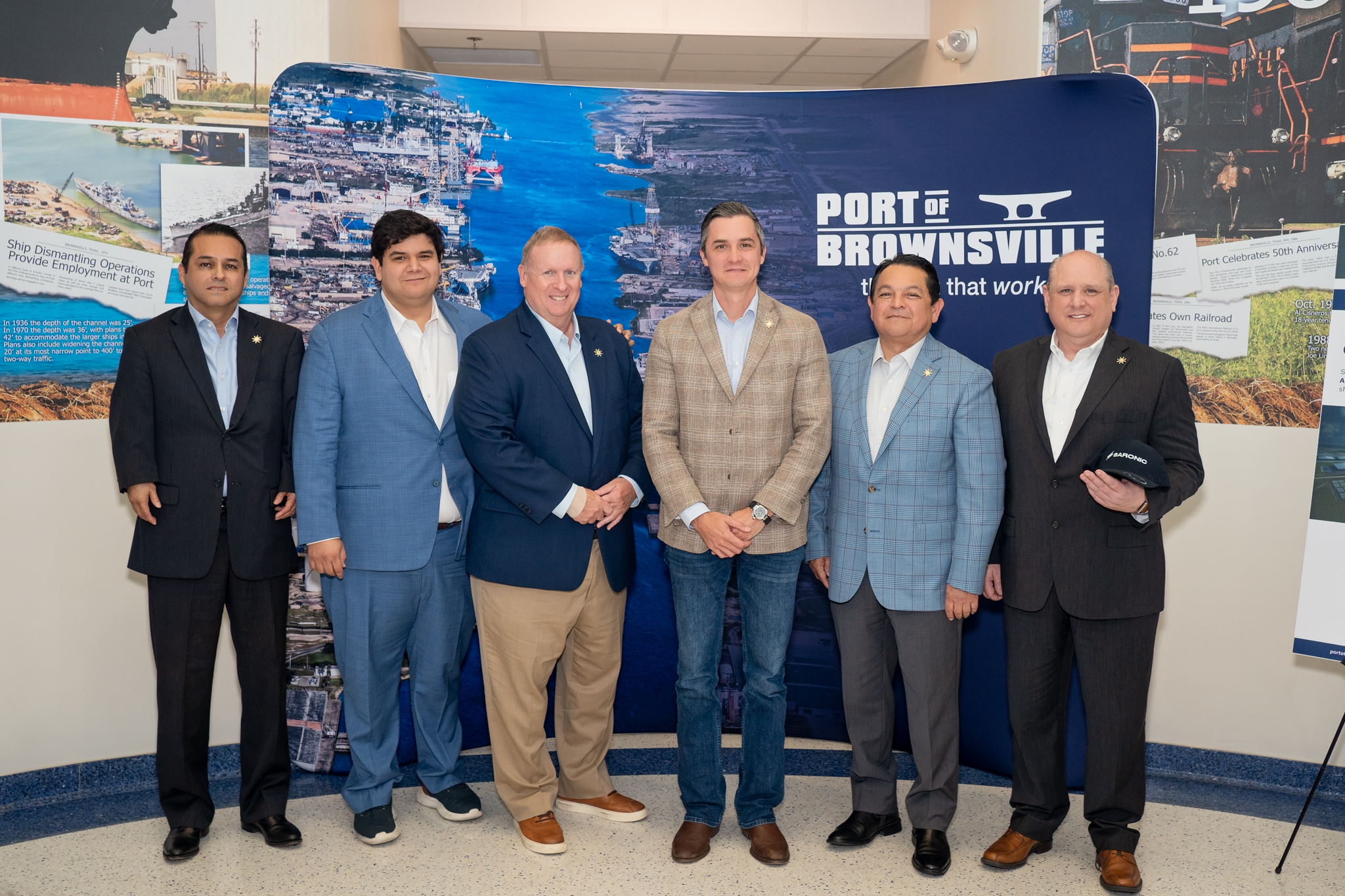 Saronic Announces Texas Site for New $3.2B Shipyard
Pre-read: Maritime autonomy is moving from clever vehicles toward yards, supply chains, certification regimes, and Navy procurement channels. Shipbuilding capacity is itself a strategic constraint, especially when autonomous systems need rapid iteration and fleet-scale manufacturing. This story clarifies whether Saronic is becoming a platform company or an industrial base bet.
Summary: USNI News reports that Saronic selected Brownsville, Texas, for Port Alpha, a $3.2 billion shipyard tied to autonomous vessel production. Port of Brownsville says the project is expected to bring 10,000 jobs to the region, begin operations in 2028, and use an 835-acre site with room to expand. The timing matters because the Navy has already bought hundreds of millions of dollars of small vessels from Saronic, and Contrary's newsletter frames the week around unmanned surface vessels entering active combat use. The durable signal is manufacturing ambition: autonomy at sea now needs hull throughput, launch cadence, maintenance infrastructure, and battle-damage learning loops, not only better perception stacks.
 New York turns compute into rate politics
Pre-read: AI infrastructure is now competing directly with voters' electricity bills, local permitting, and utility planning. Compute demand that once sounded abstract now arrives as substations, transmission queues, water fights, and rate cases.
Summary: Governor Kathy Hochul issued an executive order pausing large New York data centers while state agencies study power, climate, and community impacts. The order applies to new projects using 50 megawatts or more, a threshold that captures hyperscale AI and cloud facilities rather than ordinary server rooms. AP reports that the move is the first statewide halt of its kind in the US and sits inside a broader fight over whether data centers are local economic development or a ratepayer burden. The policy is formally temporary, but it gives other states a playbook: freeze permits, demand standards, and make host-community benefits explicit before utilities commit scarce capacity.
Ideation
Sell security and procurement teams a quarantine lane for new open-weight and foreign-hosted models before anyone in the company can wire them into agents. The product runs the model through provenance checks, policy-drift probes, data-exfiltration traps, sanctions and vendor-risk review, and workload-specific regression tests, then emits a deploy-or-block evidence pack that legal, security, and business owners can all sign.
Source Signals
- Kimi K3 Stuns the Tech World via Contrary Research
The newsletter frames Kimi K3 as a large open-weight Chinese model pressuring U.S. frontier labs on coding, agentic work, and enterprise pricing. - China's 2.8-trillion-parameter Kimi K3 beats Claude Fable 5 in Frontend Code Arena benchmark via Tom's Hardware
Reporting says Kimi K3 has 2.8T parameters, a 1M-token context window, strong coding benchmarks, and weights expected by July 27, leaving a verification gap during peak adoption interest. - DeepMind CEO calls for an independent standards body to regulate frontier AI via TechCrunch
Hassabis's FINRA-style proposal shows model review is becoming an operating requirement, not just a policy debate. - Credo AI via Prior check
Generic AI governance is already crowded; the wedge has to be operational model quarantine for fast-arriving models, not another risk dashboard.
Why Now: Capable open models can show up before their weights, training story, and enterprise safety profile are independently understood. Enterprises still want the cost and latency benefits, but the approval path is slower than developer adoption. The new primitive is a model customs checkpoint: every model entering the company leaves a repeatable evidence trail.
First Wedge: Start with regulated enterprises that already ban unsanctioned model use but cannot keep up with requests from engineering teams. Version one is a two-week intake and test harness for one high-demand model against one real workflow, such as code migration or customer-support automation.
Commercial Model: CISOs, heads of AI governance, or vendor-risk teams pay an annual platform fee plus per-model review packs. Budget comes from security review, third-party risk, and AI governance spend because the alternative is either blanket blocking useful models or accepting invisible exposure.
Defensibility: The moat is not the tests alone. It is the growing corpus of model behavior under real enterprise workloads, policy diffs across versions, red-team traces, procurement outcomes, and auditor-accepted evidence formats. Incumbent governance vendors can add checklists, but they do not naturally own executable quarantine infrastructure.
Technical Risk: The hard part is building probes that survive model gaming and actually predict deployment risk for a specific workload. Static benchmark reports will be ignored; the system has to run adversarial tasks, tool-use simulations, data-boundary tests, and regression checks cheaply enough to repeat after every model update.
Market Expansion: After open-weight LLMs, expand to vision-language models, coding agents, robotics foundation models, and domain-specific medical or financial models. The same import-quarantine primitive applies anywhere teams want cheaper frontier capability but need evidence before deployment.
Self-Critique: This can collapse into consulting if the first customers demand bespoke policy work instead of repeatable test infrastructure. It also loses if regulators standardize a single accepted testing body quickly or if enterprises decide the risk of foreign/open models is simply too high to review case by case.
Next Experiment: Interview 12 AI governance or security leaders at banks, insurers, and healthcare systems. Ask for the last model their developers wanted but risk blocked. Build one quarantine report for Kimi K3 or a similar open model against a real codebase task, then test whether the report would have changed the approval decision.
Sell utilities and local governments a covenant engine for data-center deals: a model that forecasts who pays for power, water, transmission, curtailment, tax breaks, and outage risk, then turns the forecast into enforceable host-community terms. The product is not anti-data-center; it makes a compute project financeable by proving the ratepayer downside is capped.
Source Signals
- Executive Order 62: Temporary Moratorium on Data Centers in New York via New York Governor
New York paused large data-center development while it develops standards and a benefits blueprint for host communities. - AI continues to pressure power prices via Axios
Reporting links AI load growth to power-price pressure and public backlash in PJM and other grid regions. - Why community benefit agreements are necessary for data centers via Brookings
CBAs are already being proposed, so the sharper wedge is quantified, enforceable ratepayer and infrastructure covenants rather than generic community engagement. - The Interconnection Queue Continues to Be a Barrier to US Electricity Demand Growth via RMI
Interconnection reform is a live bottleneck, but it does not solve the local trust problem around who bears the cost of upgrades.
Why Now: The bottleneck for AI compute is becoming social license plus grid finance, not just land and chips. Towns and public utility commissions need a way to say yes without writing a blank check on future rates. The new primitive is a machine-readable covenant for physical infrastructure deals.
First Wedge: Start with municipal utilities, co-ops, or county economic-development offices facing one proposed 50MW-plus project. Version one produces a rate-impact model, curtailment schedule, water and noise obligations, tax-benefit ledger, and a plain-language covenant package that can be attached to approvals.
Commercial Model: Local governments and utilities pay project fees, with developers often reimbursing the cost as part of permitting. Later revenue can include monitoring fees that verify whether the operator is meeting load, water, noise, job, and community-benefit obligations.
Defensibility: Each deal improves the library of tariff structures, negotiated covenants, rate-case evidence, local opposition patterns, and post-approval performance data. Developers want repeatable approvals across regions; public buyers want precedent they can defend. That two-sided corpus is hard for generic permitting consultants to recreate.
Technical Risk: The hard part is trustworthy scenario modeling with messy utility data: marginal generation, transmission upgrades, retail rate design, behind-the-meter power, curtailment, and tax abatements. If the model is a spreadsheet with a UI, it will not survive public hearings or utility-commission scrutiny.
Market Expansion: The same covenant engine can expand from AI data centers to battery plants, hydrogen hubs, desalination plants, advanced manufacturing campuses, and autonomous-shipyard infrastructure. Any large load that needs local approval creates the same question: who benefits, who pays, and who verifies the promise?
Self-Critique: Public-sector sales can be slow, and developers may prefer jurisdictions with weak approval processes. The wedge works only where backlash is already expensive enough that a credible covenant is cheaper than delay, cancellation, or a statewide moratorium.
Next Experiment: Pick three recent blocked or paused data-center projects and rebuild the ratepayer-impact story from public filings. Show the output to two municipal utility managers and two data-center developers; ask whether they would pay to attach it to a live approval package.