World
2 critical / 2 happenings
 Meta, Microsoft and Amazon Test Limits of Investor Appetite for AI Spending
Pre-read: The AI buildout is forcing the largest software-and-cloud companies into an asset-heavy phase that investors usually associate with utilities, telecoms, and industrials. That makes credit quality, free cash flow, and power procurement central to the AI trade. This piece is worth opening because it tracks the market's shift from excitement about AI demand to anxiety about who funds the physical plant.
Summary: The Daily Upside says Alphabet, Microsoft, Meta, and Amazon are on pace for about $700 billion of combined capex this year, with Wall Street forecasts pointing above $1 trillion in 2027. Alphabet had just reported $112.1 billion in quarterly profit, yet its shares fell more than 7% after it raised its 2026 spending forecast by $15 billion. Moody's warned that capex at Alphabet, Microsoft, Amazon, Meta, Oracle, and CoreWeave could pressure credit quality as they shift from asset-light software economics to unprecedented capital investment. Moody's estimated direct debt at those six companies around $460 billion. Oracle is the weak point in the comparison: Moody's already has it at Baa2 with a negative outlook, and S&P recently downgraded it to one notch above junk. The core implication is that AI demand can be real and still produce investor stress if financing, depreciation, and utilization move faster than monetization.
 Shein's Hong Kong IPO filing sidesteps Xinjiang cotton controversy
Pre-read: Fast fashion depends on cheap cross-border logistics, opaque supplier networks, and regulatory arbitrage. Those advantages become fragile when tariff rules, forced-labor enforcement, and listing venues collide. This article is worth opening because it shows supply-chain provenance becoming an IPO constraint rather than a corporate social-responsibility footnote.
Summary: Reuters reports that Shein's Hong Kong IPO filing made no specific mention of Xinjiang cotton risks, even though those allegations were a major obstacle in its earlier New York and London listing attempts. The filing used general reputational-risk language, while Shein again maintained that there is no forced labor in its supply chain. Reuters says Shein shifted toward Hong Kong after China's regulator could not accept a filing that explicitly mentioned Uyghur forced labor as a risk. The company is also dealing with the end of the U.S. de minimis tariff loophole, which had let ultra-cheap direct shipments avoid duties. The filing highlights Shein's 7,500 contract manufacturers and its automated test-and-reorder system as operational strengths. The uncomfortable investor question is whether the same system that creates speed and low inventory can produce the provenance needed for Western regulators.
 Deficits complicate the Fed's rate path
Pre-read: Monetary policy gets harder when fiscal borrowing keeps adding duration supply to the market. The Fed can hold short rates steady, but Treasury issuance can still tighten financial conditions through higher long yields.
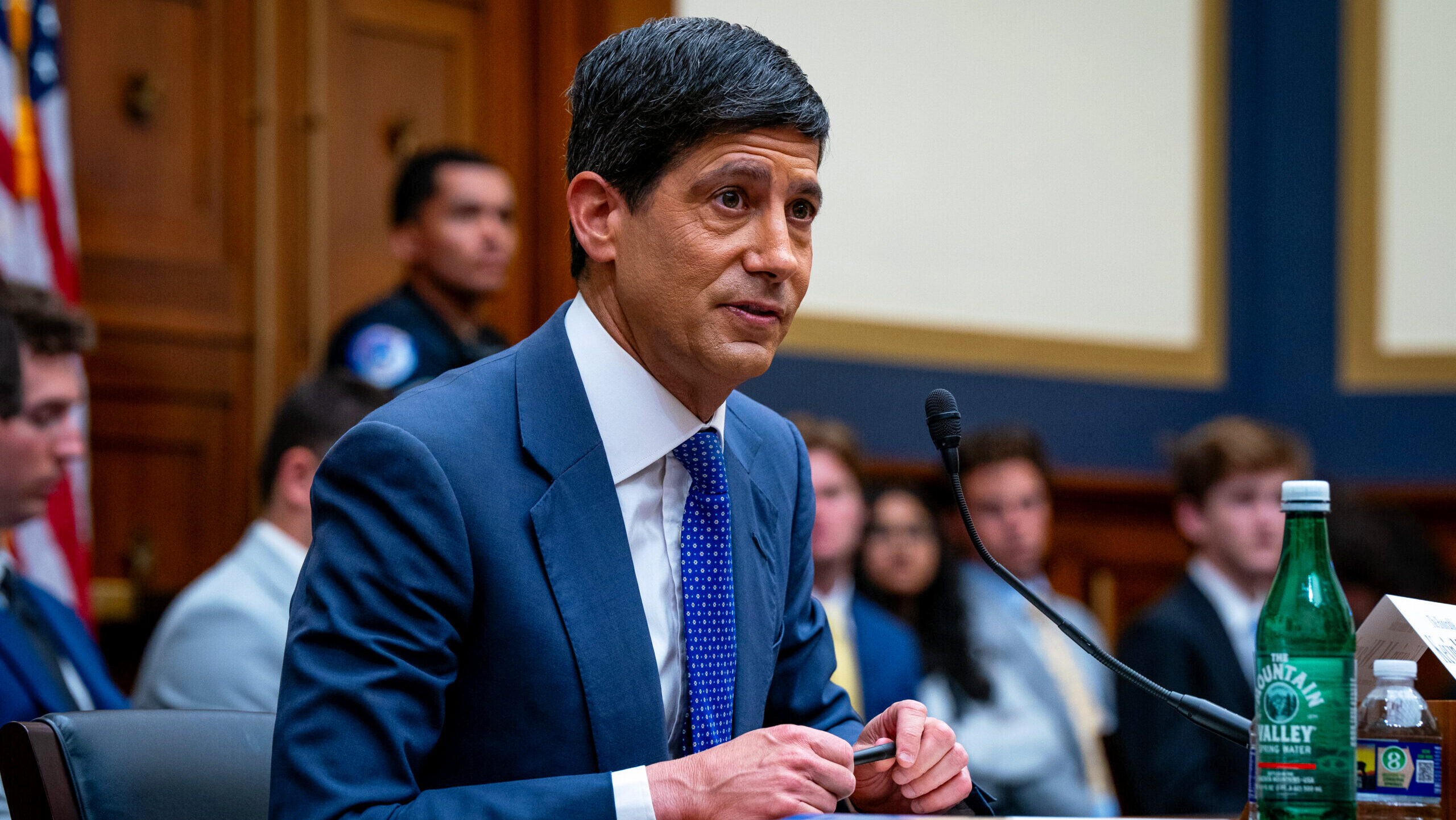
Summary: The Daily Upside reports that the U.S. government is issuing roughly $2 trillion of new Treasury bills and bonds annually as the deficit swells. The article argues that bond supply may force yields higher if investor demand does not keep pace, raising borrowing costs for households and businesses even without a Fed hike. Inflation had fallen to 3.5% in June from its 2022 peak, and weekly jobless claims had dropped to their lowest level since 1969, but the deficit backdrop keeps the policy tradeoff live. The FOMC is widely expected to hold rates steady at its July 29 meeting, yet the committee is split and markets are pricing a high chance of a September hike. The key mechanism is fiscal dominance at the margin: Treasury supply can do some of the tightening the Fed would otherwise control directly. For investors and builders, the relevant signal is that AI capex, deficits, and rates now compete for the same pool of long-term capital.
 Critical-minerals decoupling hits capacity limits
Pre-read: Industrial policy can declare strategic independence faster than mines, refineries, and qualification pipelines can produce it. Critical minerals are a useful stress test because defense, batteries, grid hardware, and advanced electronics all depend on specialized processing capacity.
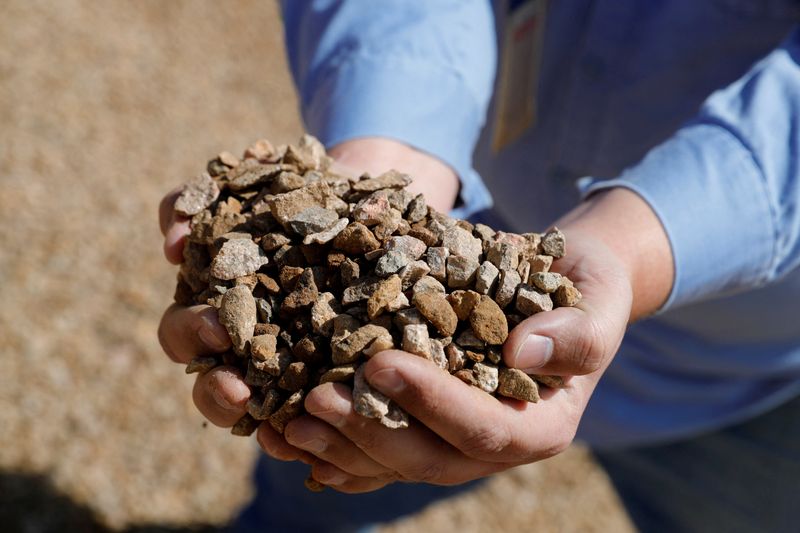
Summary: Reuters reports that the Trump administration may need to keep allowing some Chinese minerals because U.S. miners and processors are not ready to meet a January 2027 deadline. The article frames the gap as a collision between national-security urgency and the slow physical reality of extraction, refining, and customer qualification. It matters because mineral supply chains are not interchangeable commodity flows once purity, processing route, and end-use certification are considered. A hard cutoff before domestic capacity exists would risk shortages for manufacturers that policy is trying to strengthen. The practical lesson is that decoupling has to be sequenced around capacity creation, not just import restrictions. That logic applies broadly across semiconductors, defense inputs, batteries, and grid infrastructure.
A Little Wiser's issue is a three-part essay roundup: the ostrich effect as a practical model for avoiding bad information, Europe's wildfire summer as climate adaptation pressure, and the Eastern Orthodox Church as a civilizational continuity story from Constantinople to Moscow. The psychology section is the most immediately useful: it connects avoidance to short-term emotional relief and gives concrete countermeasures such as self-affirmation, implementation intentions, and accountability. The wildfire section has operational texture around AI detection cameras, rescEU firefighting capacity, and the land-use conditions that turn heat into catastrophe. The Orthodox history section is a clean high-level refresher if you want context on why religious authority, empire, and Russian identity still interlock.
Tech
2 critical / 1 happenings
 AI Engineering Productivity is Anything But Normal
Pre-read: AI coding tools are splitting software teams by operating discipline, not by access to frontier models. The companies getting durable leverage are wiring agents into issue trackers, code review, tests, and escalation paths instead of treating autocomplete as the product. The article is worth opening because it turns a noisy productivity debate into an execution model.
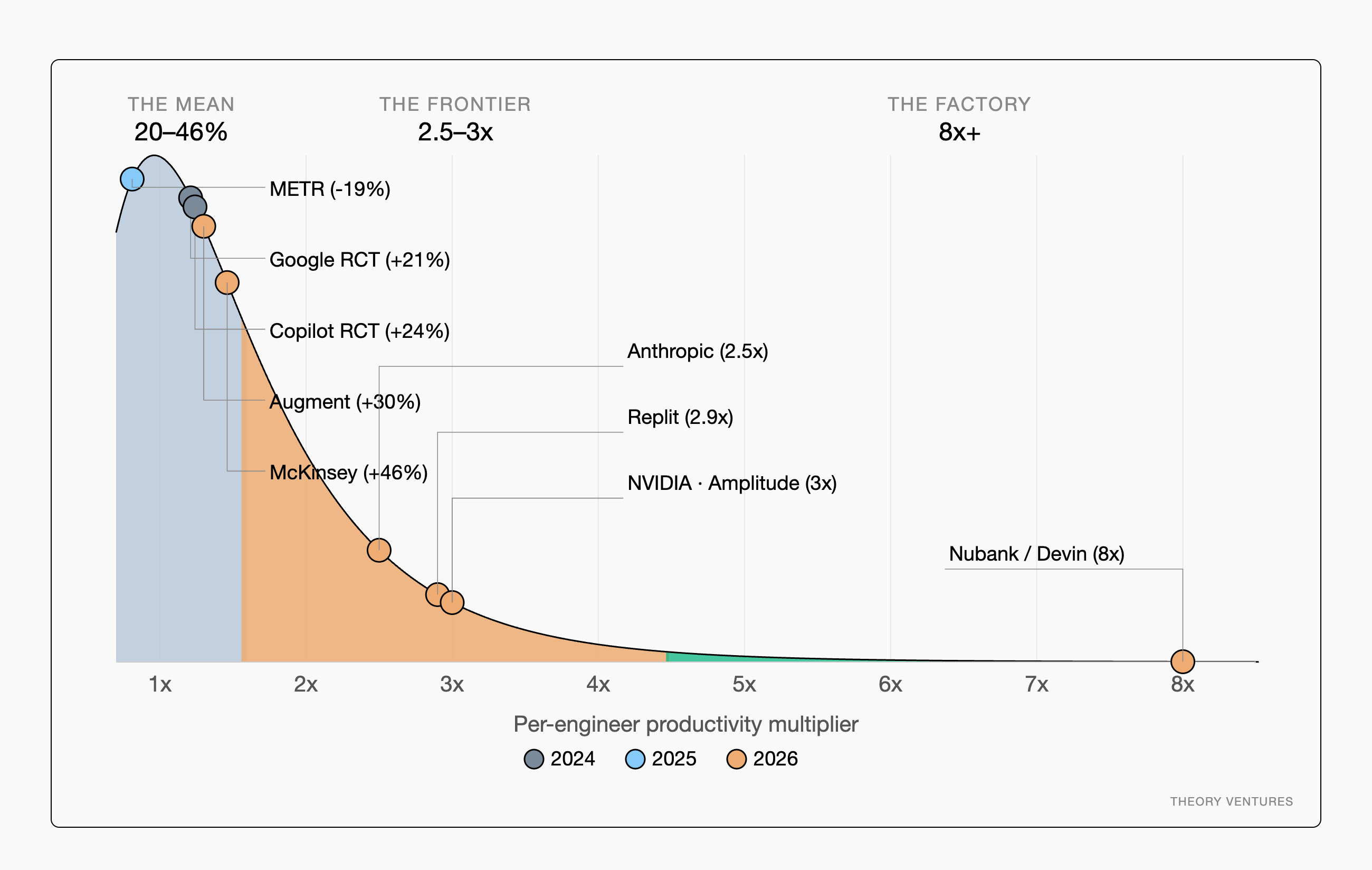
Summary: Tomasz Tunguz argues that reported AI engineering gains now cluster into three tiers: ordinary IDE rollout, workflow-level agent orchestration, and software factories. The default tier looks modest: Faros found epics completed 66% faster while bugs per developer rose 54%, while Google and GitHub-style studies land closer to low-double-digit gains. The frontier tier is where NVIDIA, Replit, Amplitude, and Anthropic report roughly 2.5x to 3x output with quality held steady. The difference is organizational plumbing: shared context, review loops, test harnesses, and human escalation. Tunguz treats the factory tier, including Devin-style refactoring, as the high-upside but highest-governance model. The useful takeaway is that AI productivity is now an operations problem, not a model-selection problem.
Pre-read: AI infrastructure is starting to look like project finance: power rights, debt guarantees, anchor tenants, and chip supply are becoming one integrated capital stack. That changes the strategic role of Nvidia from supplier to balance-sheet sponsor. This article is worth opening because it shows how far AI compute has moved from cloud procurement into national-scale industrial financing.
Summary: The WSJ reports that Nvidia is discussing a roughly $250 billion guarantee to help OpenAI lease a 10-gigawatt data-center project developed by SoftBank's energy subsidiary in southern Ohio. The broader project could exceed $500 billion once chips are included, and the guarantee would help lenders treat the financing as less risky. Reuters summarized the report as a potential Nvidia backstop for OpenAI financing, while the linked WSJ story frames the site as one of the largest AI computing hubs yet. The structure matters because OpenAI lacks the credit profile of the largest cloud incumbents but needs infrastructure at their scale. Nvidia may be protecting demand for its own chips by making the customer's financing possible. The risk is circularity: the AI boom's supplier could become exposed to the creditworthiness of the very buyers driving its growth.
Pre-read: Open-weight models are now part of the AI supply chain, so model access is becoming a procurement, security, and geopolitics problem at once. The strongest U.S. labs have incentives to frame frontier diffusion as dangerous, while startups and researchers depend on cheap open models to stay competitive.
Summary: Axios reports that OpenAI and Anthropic are jointly warning Washington about powerful Chinese open-weight models as U.S. officials debate whether Chinese open models should face national-security restrictions. The counter-lobby argues that broad restrictions would harm startups and research by removing low-cost model access. The Daily Upside's companion item adds that Microsoft, Meta, Nvidia, and Hugging Face signed an open letter opposing restrictions on open-weight AI models. The practical consequence is that model choice may soon need a provenance layer: who trained it, where it can run, what data risk it carries, and whether a buyer can defend its use under policy scrutiny. The likely enterprise response is less ideological than operational. Companies will want substitution paths that preserve cost advantages without creating an unreviewable compliance dependency.
Ideation
Sell regulated enterprises a control plane that treats every AI model like a supply-chain component: provenance, jurisdiction, weights lineage, hosting location, policy exposure, benchmark fit, and hot-swap substitutes are tracked before a request is routed. The primitive is not cheaper routing. It is auditable custody for model decisions when the cheapest capable model may also be the one procurement, regulators, or customers later force you to remove.
Source Signals
- OpenAI and Anthropic unite against China's open models via TLDR / Axios
The policy fight over Chinese open-weight models is active and unresolved, which turns model selection into a compliance and continuity problem. - Startup founders urge Trump not to shut off Chinese open weight AI via TLDR / Business Insider
Startups are pushing back because cheap open models are economically important; enterprises will want the savings without owning unexplained provenance risk. - Shein's Hong Kong IPO filing sidesteps Xinjiang cotton controversy via Reuters Week Ahead
Shein shows how a cheap cross-border input model can be repriced by provenance, tariffs, and disclosure risk. - AI Engineering Productivity is Anything But Normal via TLDR Founders / Tomasz Tunguz
AI gains are real but uneven; the winners rebuilt workflow, review, and telemetry instead of just buying more model calls.
Why Now: Model cost is dropping fast, open-weight Chinese models are good enough for real workloads, and U.S. policy is moving from abstract safety debate into procurement risk. Existing gateways optimize price, latency, fallback, and logs. The new pain is proving why a model was allowed, where it ran, what it could leak, what policy changed, and which substitute will keep the product alive tomorrow.
First Wedge: Start with banks, defense-adjacent SaaS companies, and healthcare vendors that already route across multiple LLMs but cannot answer a customer security review cleanly. Version one sits beside their AI gateway, inventories every model/provider path, assigns a custody score, blocks disallowed routes, and generates audit packets for security questionnaires and procurement renewals.
Commercial Model: The buyer is the CISO or AI platform lead with legal/procurement pulling budget. Charge an annual platform fee based on model routes and governed applications, with paid compliance packs for SOC 2, HIPAA, defense-contractor, and regional data-residency reviews. The budget exists because one blocked enterprise deal or forced model migration costs more than the tool.
Defensibility: The compounding asset is a live map of model lineage, hosting providers, sanctions/entity-list exposure, customer policy outcomes, eval substitutions, and migration playbooks. Cloud gateways can add a checkbox, but they are conflicted if they also sell model traffic; the neutral system of record for model custody can become the audit layer customers and insurers trust.
Technical Risk: The hard part is proving lineage and policy exposure when weights, fine-tunes, distillations, and hosted endpoints are intentionally opaque. The product needs a mix of provider attestations, hash/signature registries, behavioral fingerprinting, static policy rules, and reproducible evals that show a replacement model is safe enough for the same workflow.
Market Expansion: After LLM routing, expand into embedded models in devices, vendor AI features inside SaaS tools, call-center agent stacks, and regulated supply-chain software where customers need to know which autonomous system touched their data or made a decision.
Self-Critique: This could collapse into a feature of Cloudflare, Kong, Datadog, OpenRouter, or an enterprise GRC suite. It also depends on buyers caring before a major enforcement action or public breach. The wedge has to be custody evidence that wins security reviews, not another dashboard for model ops teams.
Next Experiment: In two weeks, interview 15 AI platform/CISO buyers at regulated companies and collect the exact model-provenance questions from their security reviews. Build a thin scanner for one gateway log format that flags Chinese/open-weight/unknown-hosted routes and produces a one-page audit packet. Try to get three buyers to pay for a private beta tied to an active enterprise customer review.