World
2 critical / 3 happenings
Pre-read: Export controls turned lithography into one of the core choke points of the AI hardware race. China does not need immediate EUV parity to change market psychology; credible progress in DUV can shift assumptions about long-term tool dependence and ASML's China revenue. The useful question is how much capability is real at production scale.
Summary: Reports that Shanghai Aishengna Electronic Technology Group is preparing to mass-produce immersion DUV lithography machines hit ASML shares and Asian chip stocks. The Daily Upside's account says the company plans five deliveries this year and 20 next year, while ASML shipped just over 131 ultraviolet machines last year and expects to raise capacity. Analysts cited in the newsletter argue the selloff likely overstates the near-term threat because yield, overlay, throughput, and reliability matter more than producing a few machines. EUV remains the harder barrier for leading-edge AI chips. The long-term risk is narrower but real: ASML said about 20% of 2026 revenue may come from China, so even partial substitution matters.
Pre-read: Detroit's post-EV-hype strategy is becoming a portfolio problem: defend profitable trucks and SUVs, keep an affordable EV option alive, and find revenue in defense and energy where industrial capacity is suddenly strategic. Ford's quarter matters because it shows how a legacy manufacturer reallocates after a costly battery and demand reset.
Summary: Ford raised its 2026 adjusted EBIT forecast to $10 billion-$11 billion, helped by pricing assumptions and stronger core profitability, even after reporting a Q2 net loss tied to EV charges. The Daily Upside notes Ford's EV unit has lost more than $16 billion since 2022 and is not expected to be profitable until 2029. The company is still planning a lower-cost electric pickup, but it is also pursuing Army tactical-truck prototypes and a battery energy-storage business aimed partly at data centers. The lesson is that Ford is treating electrification, defense mobility, and grid storage as adjacent uses of manufacturing capability rather than one all-in EV bet.
Pre-read: Global sports rights have become infrastructure-like assets: scarce, recurring, politically protected, and increasingly attractive to private capital. Football governance is built around federations, not shareholders, so monetizing the World Cup through a new vehicle creates an institutional fight as much as a financing plan.
Summary: FIFA's proposed FIFA Forward Enterprise would consolidate commercial rights around major competitions and seek private investment at a reported $20 billion valuation. AP says the plan could raise about $4.2 billion and includes backing from Joshua Kushner's Thrive Eternal. FIFA argues it would retain control over governance and competition decisions while giving member federations potential financial upside. UEFA reacted harshly, warning about transparency and privatization of football's central asset. The fight matters because FIFA is converting record World Cup economics into a permanent capital structure, while Europe is testing how much leverage it still has over the global body.
 Prediction markets move into drug approvals
Pre-read: Drug approvals already move billions in market value, and prediction markets turn those uncertain regulatory events into direct trading products. The hard boundary is information integrity: trial data, FDA timing, and insider knowledge are not evenly distributed.
Summary: Kalshi and Polymarket have opened markets around clinical-trial outcomes and FDA decisions, drawing concern from bioethicists, physicians, and researchers. The worry is that betting could reward behavior that undermines trial integrity or amplify incentives around selective leaks and regulatory pressure. Supporters argue event contracts can aggregate information and improve forecasts. The category is expanding while courts and regulators are still fighting over whether these products are federally regulated financial contracts or state-regulated gambling. For biotech, the market structure may become part of the information environment around trials, not just a side bet.
Pre-read: Payments networks are profitable because they sit between consumer behavior, merchant acceptance, fraud controls, and bank rails. AI, stablecoins, and agentic commerce threaten the operating model around the edges before they threaten the core transaction volume.
Summary: Visa is cutting about 2,600 jobs, roughly 7% of its workforce, with technology and product teams heavily affected. The move comes as the company adapts to AI-driven work changes and a payments market shifting toward new money-movement products. Recent reports also show Visa's quarterly revenue and payment volume still rising, so the layoffs are a strategic repositioning rather than simple distress. That contrast is the signal: even dominant networks are trying to fund the next architecture while the current one is still printing cash.
Tech
3 critical / 1 happenings
Pre-read: Embodied AI is moving into the same security category as routers, drones, and grid hardware: connected machines that can see, move, update remotely, and touch physical infrastructure. The practical issue for robotics teams is now provenance, authorization, and maintainability, not only model capability or unit cost. This order clarifies where the U.S. wants the inspection point to sit.
Summary: The FCC added foreign-produced advanced robotic devices and connected power inverters to its Covered List after national-security determinations by executive-branch agencies. New covered models are generally blocked from receiving FCC equipment authorization for U.S. import, marketing, or sale, while previously authorized models and previously purchased devices are not directly removed from use. The agency cites supply-chain disruption, surveillance, remote commandeering, and critical-infrastructure cyber risk. The order includes a conditional-approval path through DoW, and DHS for inverters, which means the future bottleneck is likely evidence: where hardware was made, how updates are controlled, and whether a device class can prove it does not pose the cited risks.
Pre-read: Cryptography has always depended on adversarial review by scarce experts, and post-quantum standardization makes that scarcity more consequential. Frontier models are starting to look less like coding assistants and more like tireless junior research organizations whose outputs still need expensive human validation. This piece is worth opening because it shows both sides of that new workflow.
Summary: Anthropic says Claude Mythos Preview found improved attacks on HAWK, a NIST post-quantum digital-signature candidate, and on a reduced-round version of AES. The company is explicit that production systems are not affected: HAWK is a candidate scheme, and the AES result applies to seven rounds rather than full AES-128. The HAWK result effectively cuts the candidate's key strength in half, while the AES work improves prior attacks by roughly 200-800x under research assumptions. The larger signal is operational: Mythos generated ideas mostly autonomously, but humans spent substantial time validating correctness. AI may accelerate cryptographic discovery before it replaces cryptographers.
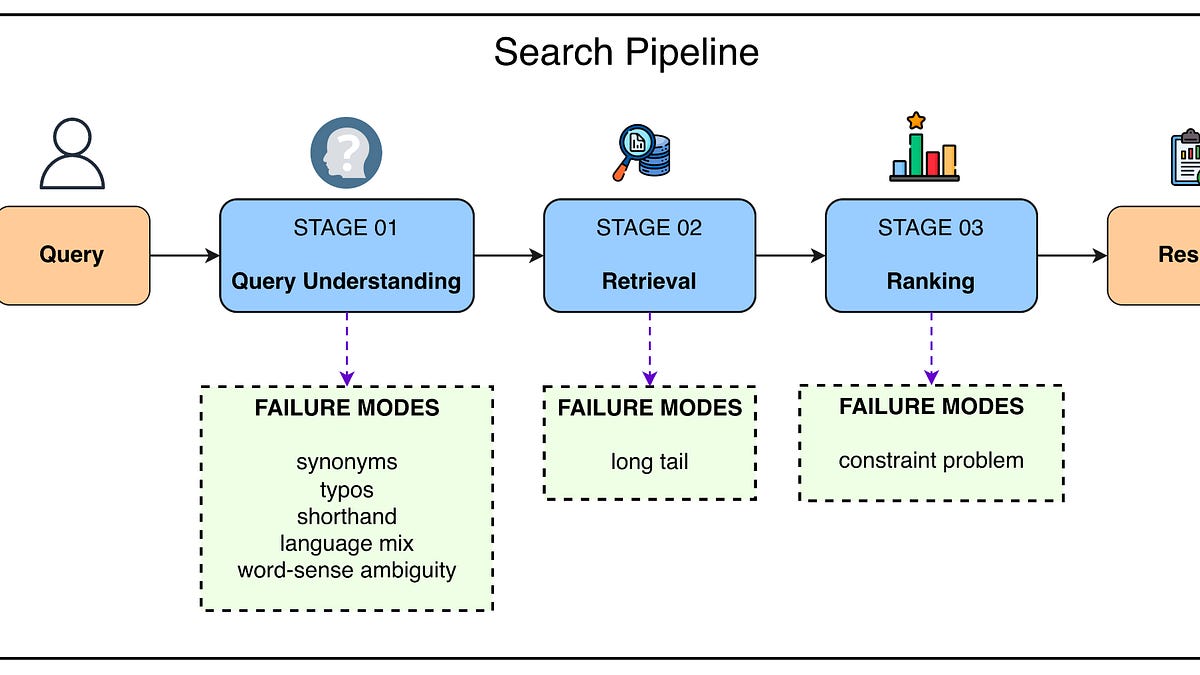 Why DoorDash, Instacart, and Uber Eats Integrated LLMs Into Search Three Different Ways
Pre-read: Search is one of the cleanest places to see LLMs meet existing production systems because intent, catalog structure, latency, and ranking all collide in one request path. The durable lesson is architectural placement: the model's value depends on where it enters the stack. This article gives three concrete patterns instead of another generic AI-search claim.
Summary: ByteByteGo compares DoorDash, Instacart, and Uber Eats as three different answers to the same food-search problem. DoorDash keeps LLMs constrained by its existing knowledge graph, using them offline and for structured query parsing while classical retrieval does most runtime work. Instacart uses context engineering, guardrails, and fine-tuned Llama-3-8B models to consolidate query-understanding systems, pushing coverage from 50% to more than 95% on rewrite tasks. Uber Eats goes deepest, fine-tuning Qwen into the embedding backbone of a two-tower retrieval system across restaurants, grocery, retail, markets, and languages. The best takeaway is that existing infrastructure, not model fashion, determined the winning integration depth.
 Apple's home strategy now depends on Siri AI
Pre-read: Apple has strong device distribution but a weak smart-home control surface compared with Amazon and Google. A home hub only becomes strategically meaningful if Siri can become a reliable ambient interface rather than a phone-era command parser.
Summary: 9to5Mac, summarizing Bloomberg, says Apple has a new Apple TV, refreshed HomePod mini, and smart-home hub nearly ready. The Apple TV and HomePod mini are expected to look similar but gain faster chips for Siri AI. The hub is reportedly planned between October and early next year, with a 7-inch square display, a tvOS-based operating system, FaceTime, HomeKit controls, security monitoring, and facial recognition that personalizes the interface. Apple is also said to be working on a later robotic hub and advanced in-home camera. The story is less about another display and more about whether Apple can make the assistant good enough to justify new home hardware.
Ideation
Sell robotics manufacturers and US buyers a live compliance evidence package for connected robots and grid-edge hardware. The product is not another policy checklist; it is a device passport that binds firmware lineage, radio modules, remote-update paths, sensor data flows, country-of-production evidence, and operator-control modes into the exact proof a test lab, importer, insurer, or enterprise buyer needs before a robot or inverter can be purchased.
Source Signals
- FCC Updates Covered List to Include Foreign-Produced Advanced Robotic Devices and Power Inverters via FCC / TLDR
The FCC added foreign-produced advanced robotic devices and connected power inverters to the Covered List, blocking new equipment authorizations unless a device gets conditional approval. - The US just banned foreign robots and inverters, and it means China via TLDR
The policy turns cheap embodied AI hardware into a procurement and authorization risk, not just a performance decision. - UL Solutions Launches First Certification Program to Advance Microgrid Cybersecurity and Safety via Web verification
Inverters already have a new cybersecurity certification lane, which suggests buyers will pay for evidence that can survive auditors.
Why Now: Embodied AI is crossing from demo videos into homes, warehouses, defense-adjacent fleets, and energy infrastructure at the same time regulators are treating connected motion and power electronics as national-security surfaces. Buyers will not wait for perfect domestic hardware, but they will need a way to prove what they can legally buy, update, insure, and deploy.
First Wedge: Start with US enterprises importing or evaluating humanoids, AMRs, quadrupeds, or inverter-backed battery systems. In 30 days, produce a procurement-grade authorization memo, SBOM-style hardware/software inventory, update-path map, and conditional-approval packet for one model.
Commercial Model: Manufacturers pay per device model for evidence generation and continuous monitoring; enterprise buyers pay per procurement review. Budget comes from legal, supply-chain security, product compliance, and risk teams because a blocked equipment authorization or failed procurement review kills revenue immediately.
Defensibility: Each review creates a normalized corpus of device components, firmware behaviors, suppliers, test-lab findings, and regulator language. Over time the company becomes the fastest translator between physical device reality and authorization evidence, while generic GRC vendors lack hardware telemetry and labs lack continuous software visibility.
Technical Risk: The hard part is proving enough without full vendor transparency: firmware provenance, radio stack behavior, remote operator paths, and data egress need semi-automated inspection that works across messy robot and inverter architectures.
Market Expansion: The same passport expands from humanoids and inverters into drones, home security devices, industrial vision systems, medical robots, and any connected machine where movement, sensing, or power control creates policy risk.
Self-Critique: This can collapse into compliance consulting if the product never captures repeatable evidence. It is also exposed to policy volatility: if waivers become political or standards stay vague, buyers may pay lawyers instead of software.
Next Experiment: Interview 10 robotics importers, two FCC test labs, two enterprise robotics buyers, and one insurer. Build a manual passport for a popular foreign robot model and see whether a buyer would pay $15k-$50k to de-risk a purchase order.
Sell pharma discovery teams a calibration layer that tells them when an organoid or organ-on-chip assay is trustworthy enough to make a program decision. The company does not sell better mini-organs; it sells the missing release test: reference perturbations, morphology drift scoring, donor-line comparability, instrument metadata, and regulator-readable context-of-use evidence for each assay batch.
Source Signals
- Why haven't organoids solved all of drug discovery? via TLDR
The core bottleneck is reliability and biological context, not whether organoids are theoretically useful. - Roadmap to Reducing Animal Testing in Preclinical Safety Studies via FDA
FDA materials explicitly discuss organoids and microphysiological systems as part of reducing animal testing, but the path depends on credible evidence. - Human organoids: Fit for drug discovery? via Web verification
Recent review literature still points to standardization, miniaturization, and assay format limits as adoption blockers.
Why Now: AI can generate far more hypotheses and candidate compounds than wet labs can validate, while regulators and pharma are opening the door to new approach methodologies. That makes bad assay confidence expensive: a team needs to know whether a negative result is biology, a failed mini-organ, or a protocol artifact.
First Wedge: Pick one high-value context, such as liver toxicity for biologics or patient-derived tumor organoid response. Provide a kit plus software report that runs control perturbations, images the assay, compares it against reference distributions, and issues a pass/fail confidence score before the customer's compound readout is trusted.
Commercial Model: Pharma and CRO assay-development teams pay per validated assay context and per batch report. Budget exists because a misleading preclinical screen can waste months of chemistry, animal studies, or clinical-prep work.
Defensibility: The compounding asset is a cross-lab reference map linking organoid morphology, protocol metadata, perturbation response, donor background, and downstream clinical or animal concordance. CROs can run assays, but a neutral acceptance layer becomes more valuable as it sees more labs and more failure modes.
Technical Risk: The hard thing is separating biological variation from process noise with enough confidence to change decisions. The product needs reference perturbations and imaging/model features that transfer across labs without pretending all organoids are interchangeable.
Market Expansion: Once one context works, expand to cardiotoxicity, neurotoxicity, inflammatory disease models, vaccine response, environmental toxicology, and self-driving labs that need automated go/no-go gates.
Self-Critique: This may be too early if pharma still treats organoids as exploratory biology rather than decision-grade evidence. It also requires careful trust-building because labs will resist an outside system that invalidates expensive runs.
Next Experiment: Partner with one CRO and one pharma translational team. Take 100 historical assay runs, blind-score run quality from images and metadata, and test whether the score predicts replicate failure or disagreement with known controls better than the lab's current QC.