World
2 critical / 2 happenings
Pre-read: Sanctions enforcement increasingly runs through crypto rails, offshore payment processors, and apparently mundane consumer businesses. The hard problem is attribution across legal entities, wallets, exchanges, and jurisdictions that benefit from opacity. Reuters' investigation follows that machinery rather than treating sanctions evasion as an abstract compliance failure.
Summary: Reuters reports that one of the world's largest illegal gambling networks moved millions of dollars of crypto through a Dubai office tied to Shelbit, an unlicensed crypto exchange run by an expatriate Iranian. Data shared by two crypto investigative firms and an independent analyst, reviewed by Reuters, linked the network to a roughly $4 billion Iranian sanctions-evasion operation. The reporting matters because it shows how gambling liquidity, crypto exchange infrastructure, and sanctions pressure can fuse into a parallel financial system. For institutions, the lesson is that illicit-finance risk is migrating into mixed consumer and crypto channels where ordinary transaction monitoring is weaker.
Pre-read: Ceuta and Melilla turn Mediterranean migration into a land-border crisis inside the European Union. Their geography makes Moroccan cooperation, Spanish border capacity, and EU migration politics inseparable. This story shows how fast that equilibrium can break.
Summary: Reuters reports that Spain and Morocco reinforced the border fence around Ceuta after about 49,000 people arrived in a single day and at least 19 bodies were found at sea. The newsletter frames the rush as a major North African migration emergency, with Reuters pointing readers to its World News podcast for causes and context. The scale matters more than the headline: a one-day surge of that size can overwhelm humanitarian triage, border enforcement, diplomatic coordination, and domestic politics at once. It also makes the Spain-Morocco relationship a live control point for EU migration stability.
Pre-read: Public markets are starting to distinguish AI capex that is visibly monetizing from AI capex that still looks speculative. Hyperscaler earnings have become a referendum on whether compute demand can absorb hundreds of billions of dollars in infrastructure.
Summary: Reuters and The Daily Upside both point to Amazon's latest quarter as evidence that investors will tolerate huge AI spending when cloud revenue is accelerating. The Daily Upside says AWS revenue rose 37% year over year to $42.2 billion, its fifth straight quarter of accelerating growth and its fastest growth rate in 18 quarters. Amazon also raised capex guidance about 10% to $220 billion, while saying its AI business and in-house chips business each passed $25 billion annual run rates. The market reaction contrasted with Meta's selloff after higher AI spending pressure and Microsoft's rally after Azure passed $100 billion in annual revenue. The takeaway is sharper capital discipline, not weaker AI demand.
Pre-read: Japan's monetary policy matters because it anchors one of the world's biggest funding currencies. A stronger yen or higher Japanese rates can ripple through carry trades, global bond demand, and risk assets.
Summary: Reuters says the Bank of Japan kept rates steady but warned for the first time that underlying inflation could exceed its target. The signal followed government yen-buying intervention and points toward further rate hikes if price pressure persists. That makes the BOJ one of the few major central banks still dealing with a normalization problem after years of ultra-low rates. The policy path is important for global markets because Japanese investors are large holders of overseas bonds, and even modest domestic yield changes can alter capital flows.
Tech
2 critical / 2 happenings
 US bans foreign-made humanoid robots, targeting China over national security
Pre-read: Humanoid robots are moving from demo-stage curiosities into a supply-chain and endpoint-security fight. Cheap, capable hardware changes deployment math, but mobile machines also carry sensors, radios, firmware, and physical actuation into factories, labs, campuses, and public agencies. The article clarifies where Washington is drawing the permission boundary.
Summary: AP reports that the FCC is banning new imports of foreign-made humanoid and quadruped robots, plus power inverters, on national-security grounds. The move targets China without naming only China: Beijing dominates humanoid production, and Omdia estimates Unitree and Agibot each shipped more than 5,000 of roughly 15,000 global humanoid units in 2025 while U.S. rivals shipped at most a few hundred. China accused the U.S. of protectionism and said it would defend Chinese companies' interests. The practical consequence is that robot buyers may need to treat provenance, firmware assurance, and waiver eligibility as core procurement criteria, not afterthoughts.
Pre-read: U.S. AV regulation has been stuck between federal vehicle rules written for human drivers and city-level operating politics. Purpose-built robotaxis need exemptions before they can scale commercially, while regulators still need evidence that fleets behave safely outside controlled pilots. This NHTSA action is a concrete signal about that transition.
Summary: NHTSA said it will allow Zoox to commercially deploy robotaxis through a temporary exemption covering up to 2,500 vehicles annually for two years. The agency also announced work with SAE Industry Technologies Consortia on a three-year, $5 million A2SCEND effort to develop AV performance standards. It is updating exemption rules, modernizing guidance for AV developers, and asking for public feedback on topics including emergency responder interactions, safety management systems, remote assistance, and post-crash behavior. For embodied AI companies, the pattern is clear: commercial permission is becoming an ongoing oversight relationship, not a one-time demo blessing.
 Robot security becomes deployment infrastructure
Pre-read: A robot fleet's attack surface includes local wireless setup, privileged firmware paths, cloud telemetry, and physical behavior. That makes robotics security closer to industrial control security than ordinary app security.
Summary: IEEE Spectrum reports that researchers disclosed a Bluetooth Low Energy configuration flaw affecting Unitree Go2 and B2 quadrupeds and G1 and H1 humanoids. The issue allowed authenticated access using hardcoded keys and could enable root-level code execution through the Wi-Fi setup flow. Researchers described the exploit as wormable because a compromised robot could scan for nearby Unitree robots and spread without user intervention. Unitree later said it had addressed most concerns and would roll out updates. The episode gives the FCC-style import-security argument a concrete technical substrate: cheap mobile robots are networked endpoints with bodies.
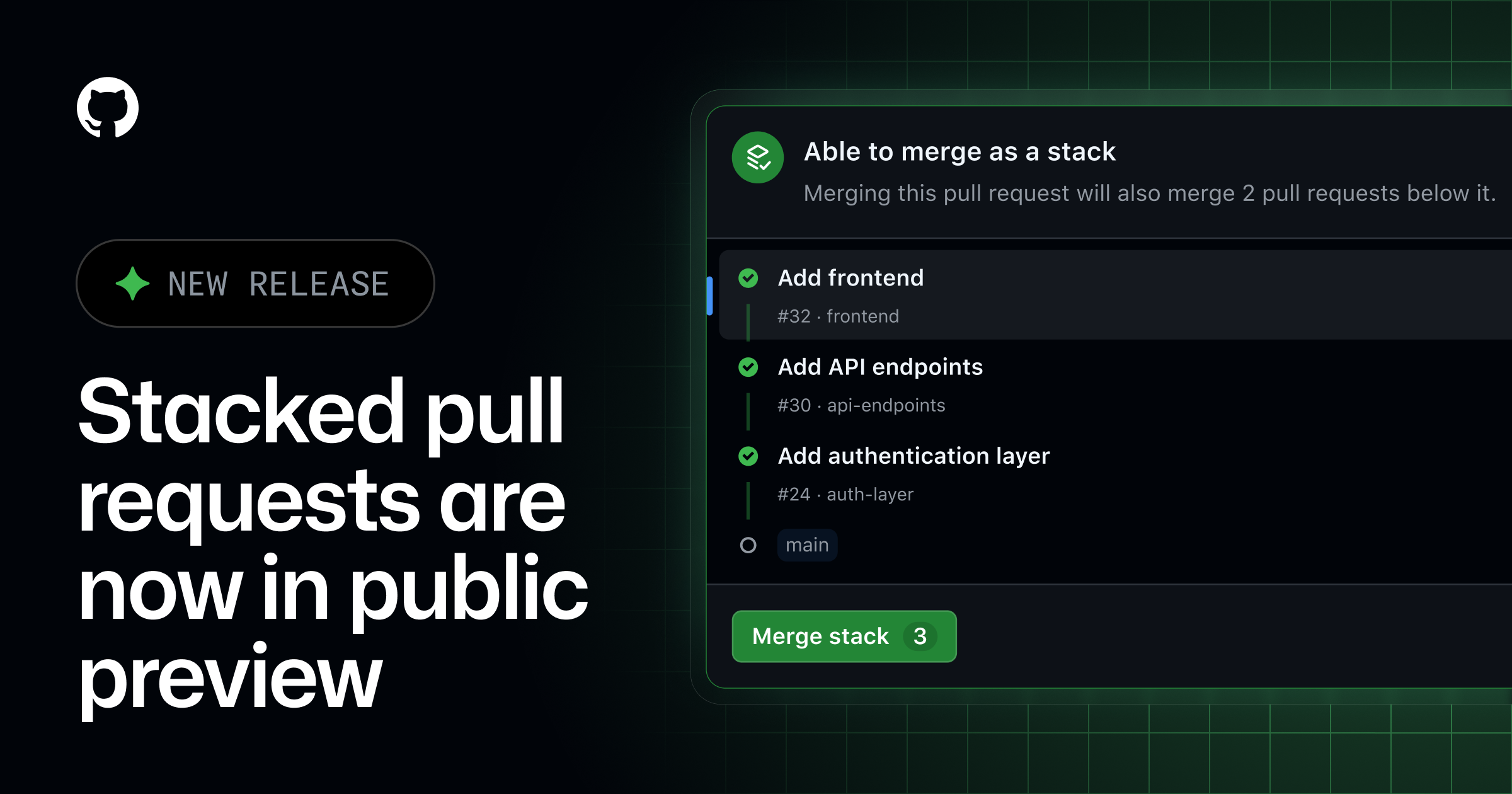 Stacked PRs answer AI code volume
Pre-read: AI coding tools increase output before they increase review capacity. The bottleneck shifts from typing code to decomposing change, preserving review context, and keeping branch protections meaningful.
Summary: GitHub put stacked pull requests into public preview, letting developers split one large change into ordered, focused PR layers. Each layer can be reviewed and checked independently, while teams can merge one layer, several layers, or an entire stack. GitHub says existing reviews, checks, and merge requirements work with the feature. The launch is small as a product feature but large as a workflow signal: AI-era engineering needs review systems that turn volume into inspectable structure.
 Today's Wisdom - Aschenbrenner, Port and Sneezes
A Little Wiser packages three compact essays: a cautionary finance parable about Leopold Aschenbrenner's AI-infrastructure conviction colliding with leverage and timing, a Georgian history note on the status culture around port drinking, and a physiology explainer on sneezing and the photic sneeze reflex. The Aschenbrenner piece is the useful one for this gear: it separates being directionally right about AI buildout from surviving market structure, leverage, and crowded-trade dynamics.
Ideation
Sell a compliance and telemetry passport for mobile robots: origin, firmware bill of materials, radio behavior, update history, known vulnerabilities, operating logs, and deployment permissions in one machine-readable record. The first buyers are U.S. robot importers, warehouse automation teams, insurers, and local regulators who suddenly need to decide which robots are allowed into a facility, a city, or a fleet. The primitive is not robot cybersecurity in general. It is a live trust credential for embodied machines that can move, see, connect, and cause physical harm.
Source Signals
- US bans foreign-made humanoid robots, targeting China over national security via The Daily Upside
The FCC restriction turns robot origin and supply-chain trust into a go-to-market blocker, not a back-office compliance detail. - Unitree Robot Hack: What You Need to Know via IEEE Spectrum
The Unitree exploit shows why a robot risk record must cover firmware, BLE setup, local network behavior, and physical control paths. - New AV Safety Standards and Zoox Robotaxi Exemption via TLDR
NHTSA's Zoox exemption points toward monitored commercial deployment and evidence-backed operating permission. - DoorDash Is Building More Than a Drone Delivery Service via TLDR
DoorDash's drone move makes the same point in logistics: the hard part is the operating system around the machine.
Why Now
Cheap embodied systems are crossing the line from lab tools to commercial fleets while regulators are reacting to foreign hardware, local safety, and cyber-physical risk at the same time. Buyers cannot wait for a clean national framework. They need a practical way to approve, insure, monitor, and revoke robot deployments across mixed fleets.
First Wedge
Start with U.S. warehouses and robotics integrators that already use or resell foreign AMRs, quadrupeds, or humanoid dev kits. Ship a 30-day assessment that produces a robot passport: hardware provenance, firmware/SBOM scan, radio and network test, vulnerability register, operating-policy template, and insurer/regulator export packet.
Commercial Model
Charge integrators and fleet operators $15k to $50k per robot model for certification onboarding, then $50 to $300 per active robot per month for continuous telemetry, vulnerability updates, and audit exports. Budget comes from blocked imports, customer security reviews, insurance underwriting, and enterprise procurement requirements.
Defensibility
The compounding asset is a cross-vendor evidence graph: which components, firmware versions, network behaviors, incident patterns, and mitigations correlate with approved deployments. Incumbent cybersecurity firms can run assessments, but they do not automatically have robot-specific test fixtures, deployment telemetry, insurer relationships, or a neutral credential buyers will accept across vendors.
Technical Risk
The hard part is extracting trustworthy evidence from heterogeneous robots without becoming a lab-services bottleneck. The product needs repeatable hardware benches, signed agentless network observation, firmware/SBOM normalization, tamper-evident logs, and a defensible scoring model that does not overclaim safety.
Market Expansion
After warehouses, expand to universities, hospitals, malls, security contractors, agriculture, construction sites, delivery robots, and drone-adjacent ground infrastructure. The same passport can become a procurement requirement, an insurance input, and eventually an API for cities and facilities to admit or deny autonomous machines.
Self-Critique
This could collapse into consulting if regulators do not recognize the credential or if vendors refuse deep access. The wedge is also exposed to policy whiplash: a blanket ban can reduce the need to evaluate some foreign robots, while a loose waiver process can make buyers complacent. The company has to win as the neutral evidence layer, not as a lobbyist or generic audit shop.
Next Experiment
Interview 10 robotics integrators, 5 warehouse automation buyers, 3 insurers, and 2 compliance lawyers about deals delayed by robot origin, cybersecurity review, or safety approval. In parallel, run a pilot on two low-cost robot platforms: produce a passport, identify firmware/network risks, and test whether one buyer would attach it to a procurement or insurance review.